
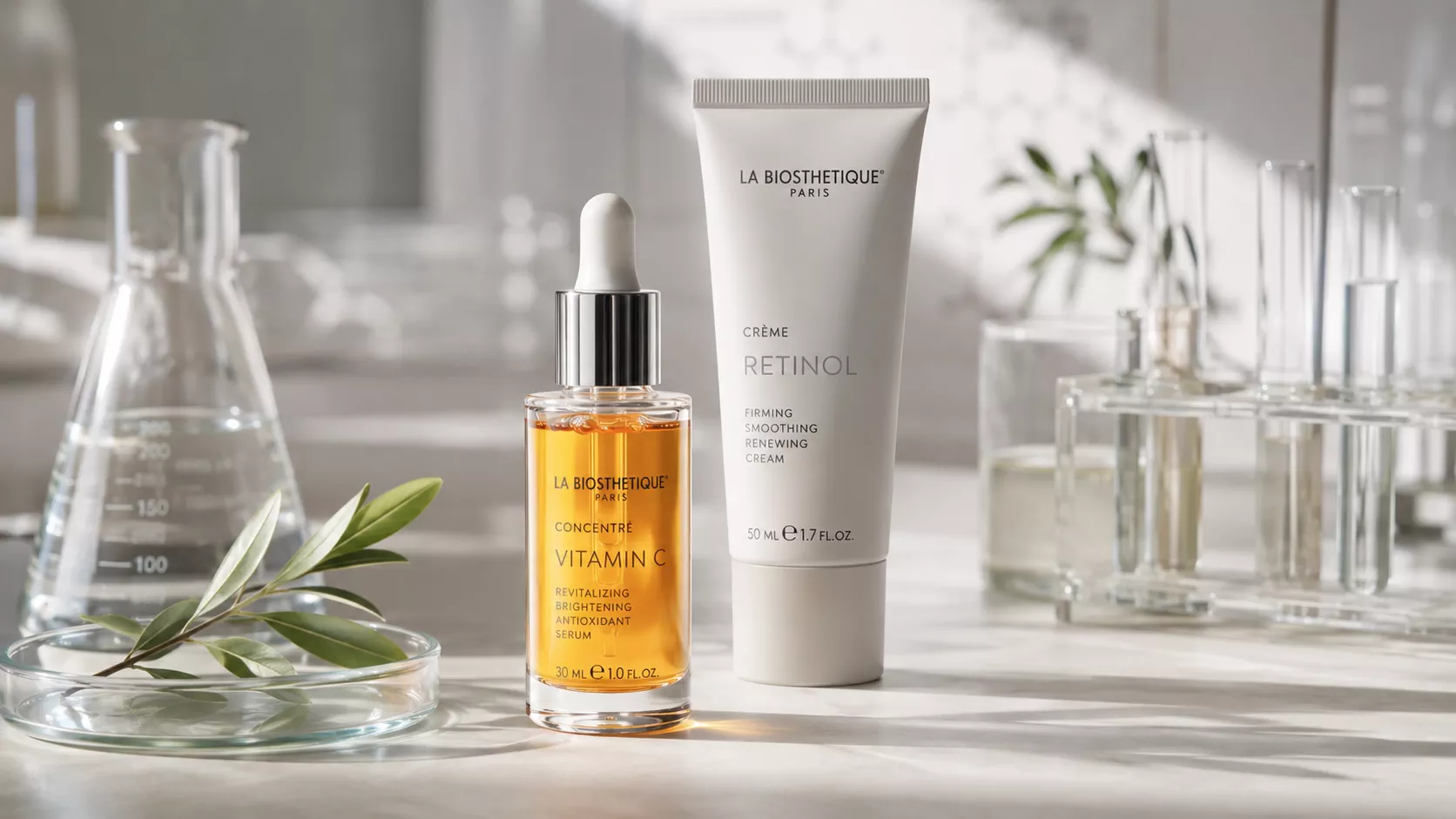
Retinol and Vitamin C together reign supreme as two powerhouse actives in every clean beauty routine, especially when you first dive into the world of skincare and find it incredibly empowering. As you start learning about holy-grail ingredients that promise to transform your complexion, fade stubborn dark spots, and grant you that coveted, lit-from-within glass skin, your vanity quickly becomes lined with sleek dropper bottles and aesthetic, minimalist tubes featuring these two ultimate stars.
Vitamin C is the ultimate daytime defender—a potent antioxidant that brightens dullness, fights free radical damage, and protects your skin barrier from daily environmental stressors like pollution and blue light. Retinol, on the other hand, is the gold standard of nighttime renewal—a vitamin A derivative celebrated by dermatologists worldwide for its unmatched ability to accelerate cell turnover, smooth fine lines, and clear up stubborn hormonal blemishes.
Naturally, you might think: “If both of these ingredients are absolute lifesavers for my skin, shouldn’t I layer them at the same time to get double the benefits?”
Here at keditbeauty, we believe that true skincare confidence comes from understanding the clean science behind your favorite products, matching innovative K-beauty philosophies with clinically proven ingredients. And in the realm of skin science, chemistry dictates the rules. Layering highly active ingredients without understanding how they interact at a cellular level is one of the most common skincare layering mistakes. When you try to mix retinol and vitamin c together without a strategic plan, it can lead to intense irritation, redness, flaking, and a compromised skin barrier, ultimately sabotaging your skin goals and leaving you with a sensitized mess.
So, can you actually use retinol and vitamin c together in a single routine? The answer is a resounding yes, but it requires a strategic, scientifically backed approach. In this comprehensive guide, we will break down the molecular science behind these ingredients, expose the biological risks of improper layering, and provide you with a foolproof routine to maximize your glow without the irritation.
1. The Molecular Science Behind Vitamin C and Retinol
To truly understand why these two ingredients can conflict, we need to take a step back and examine them through a scientific lens. Your skin is a complex biological ecosystem, and topical ingredients rely heavily on specific environmental conditions—particularly pH levels—to penetrate the stratum corneum (the outermost layer of the skin) and perform effectively.
The Low pH Nature of Vitamin C (L-Ascorbic Acid)
Pure Vitamin C, biologically known as L-Ascorbic Acid, is notoriously unstable and highly sensitive to light, air, and temperature. For L-ascorbic acid to successfully penetrate your skin barrier and neutralize free radicals, it requires a highly acidic environment.
• The Optimal pH: Pure Vitamin C formulas generally operate at a very low pH, typically between 2.5 and 3.5.
• The Cellular Mechanism: According to clinical studies, this acidic environment keeps the L-ascorbic acid molecule uncharged, allowing it to easily pass through the lipid matrix of your skin. When choosing a Vitamin C serum for your morning routine, look for a concentration between 10% and 20% for optimal efficacy.
If the pH rises above this threshold, or if the concentration is too low, the ingredient degrades rapidly, losing its antioxidant potency and turning into an ineffective, oxidized orange fluid. To understand the deeper clinical efficacy of topical antioxidants, you can review the extensive research on Topical Vitamin C Skin Benefits by the National Institutes of Health which outlines its biological impact.
The Alkaline and Enzyme-Dependent Path of Retinol
Retinol operates on a completely different biological wavelength. When you apply retinol to your skin, it does not work instantly. Instead, your skin cells must undergo a multi-step conversion process, transforming retinol into retinaldehyde, and finally into its active form: retinoic acid.
• The Optimal pH: The biological enzymes responsible for this conversion process function best at a neutral pH, ideally between 5.5 and 6.5.
• The Cellular Mechanism: Your skin’s natural surface pH is slightly acidic (around 4.7 to 5.5). When you introduce retinol, it works in tandem with your skin’s natural enzymes to stimulate collagen production and speed up cellular turnover.
(Note: In our upcoming Skin Science breakdown, we will deeply explore how different molecular weights of hyaluronic acid interact with this lipid barrier—stay tuned for our deep-dive guide!)
The Chemical Clash: What Happens When They Mix Directly?
When you mix pure Vitamin C and Retinol directly on top of each other in the same routine, you create an immediate chemical mismatch.
The low pH of the Vitamin C alters the neutral pH environment that Retinol requires to convert into retinoic acid. Essentially, the Vitamin C neutralizes the efficacy of the retinol, while the retinol raises the pH of the Vitamin C, causing it to oxidize and lose its brightening properties. Instead of receiving double the benefits, you end up rendering both expensive products virtually useless. This is exactly why applying retinol and vitamin c together in the exact same layer is highly discouraged by molecular chemists.
Furthermore, applying an ultra-acidic product alongside a potent cell-communicating agent simultaneously sends conflicting signals to your skin cells. This overloads your skin barrier, triggering inflammation, contact dermatitis, and a significant increase in transepidermal water loss (TEWL).
2. Navigating the Pitfalls: Common Skincare Layering Mistakes
In our quest for flawless skin, it is easy to fall into the trap of “more is better” or getting influenced by viral skincare trends on social media. However, modern skin science proves that over-complicating your routine often does more harm than good. Let’s look at the specific mistakes 2030 women frequently make when handling these actives.
Real-Time Incompatibility and the “Purging” Trap
A major mistake is applying Vitamin C immediately followed by Retinol at night. Because both ingredients alter cellular behavior, applying them at the exact same time causes severe micro-inflammation.
Many people confuse this self-induced chemical irritation with a natural “retinol purge.” While true purging (the temporary acceleration of acne due to increased cell turnover) does happen, prolonged redness, burning, tight, dry patches, and a stinging sensation when applying basic moisturizer are actually signs of a chemically stripped skin barrier.
Ignoring Ingredient Derivatives
Another mistake is treating all forms of Vitamin C and Vitamin A the same. Skincare science has advanced significantly, and today, there are stabilized derivatives available that change how we layer products.
• Vitamin C Derivatives: Ingredients like Sodium Ascorbyl Phosphate or Tetrahexyldecyl Ascorbate are formulated at a much higher, gentler pH (around 6.0 to 7.0). They are much more stable and less irritating for sensitive skin.
• Vitamin A Derivatives: Gentle alternatives like Granactive Retinoid or Bakuchiol (a plant-based retinol alternative) exert much less stress on the skin barrier.
While these derivatives are far more forgiving and less likely to clash chemically, layering them carelessly without proper spacing can still overwhelm sensitive or reactive skin types.
3. The Ultimate Strategic Blueprint: How to Separate Your Actives
Thankfully, you do not have to choose between the brightening power of Vitamin C and the anti-aging benefits of Retinol. You can absolutely enjoy the incredible clinical benefits of retinol and vitamin c together as long as you split them logically between your AM and PM routines. The secret lies in a concept called chronocosmetics—aligning your skincare routine with your body’s natural circadian rhythms.
By strategically assigning Vitamin C to your morning routine and Retinol to your evening routine, you allow each ingredient to work under its optimal conditions, giving you the best possible results.
[AM/PM ROUTINE BLUEPRINT]
| Routine | Step-by-Step Guide | Key Focus & Details |
|---|---|---|
| Morning (AM) Protection & Radiance |
Step 1: Cleanse | Gentle, low-pH cleanser to preserve skin barrier |
| Step 2: Vitamin C Serum | Antioxidant protection (10%-20% concentration) | |
| Step 3: Hydrate | Lightweight, oil-free moisturizer | |
| Step 4: Sunscreen | Broad-spectrum SPF 30 or higher (Non-negotiable) | |
| Nighttime (PM) Deep Repair & Renewal |
Step 1: Double Cleanse | Oil cleanser followed by a gentle gel cleanser |
| Step 2: Toner / Essence | Hydrating and soothing base (Centella or Heartleaf) | |
| Step 3: Retinol | Cell renewal (Pea-sized amount of 0.25 – 0.5 grams) | |
| Step 4: Barrier Cream | Rich, comforting moisturizer packed with ceramides |
The Morning (AM) Routine: Protection and Radiance
During the day, your skin is in defense mode, fighting off UV radiation, pollution, and blue light. This makes the morning the perfect time for Vitamin C.
- Step 1: Gentle Cleanse. Wash your face with a lukewarm splash of water or a gentle, hydrating, non-stripping cleanser to maintain your skin’s natural oils.
- Step 2: Apply Vitamin C Serum. Apply a few drops of your Vitamin C serum to clean, dry skin. Allow it to absorb fully for 2–3 minutes. This antioxidant shield will boost the efficacy of your sunscreen and prevent daytime hyperpigmentation.
- Step 3: Lightweight Hydration. Apply a fluid moisturizer or a hyaluronic acid serum to lock in hydration without feeling heavy or clogging your pores.
- Step 4: Broad-Spectrum Sunscreen (Crucial Step). Retinol use at night makes your skin significantly more photosensitive during the day. For official medical guidelines on how to correctly choose and apply sun protection when using retinoids, check out the American Academy of Dermatology Sunscreen Resource Guide to ensure you are fully protected. Without SPF, the UV damage will instantly cancel out any progress made by your nighttime retinol.
The Nighttime (PM) Routine: Deep Repair and Cellular Renewal
At night, your body enters a state of rest and repair. Your skin barrier becomes more permeable, and cell division peaks, making it the ideal environment for Retinol to do its heavy lifting.
- Step 1: Double Cleanse. Use an oil-based cleanser to dissolve makeup and sebum, followed by a gentle water-based gel cleanser to remove residual impurities.
- Step 2: Hydrating Toner / Essence. Apply a soothing, alcohol-free hydrating toner. Look for ingredients like Centella Asiatica, heartleaf, or panthenol to calm the skin. (Pro-tip: Let your skin dry completely before the next step. Applying retinol to damp skin causes it to absorb too deeply and too quickly, increasing the risk of irritation.)
- Step 3: Apply Retinol. Dispense a pea-sized amount of retinol (roughly 0.25 to 0.5 grams for the entire face) and gently distribute it across your face, avoiding the immediate eye area and the corners of your mouth.
- Step 4: Nourishing Barrier Cream. Wait about 5 minutes, then seal everything in with a rich, comforting moisturizer packed with ceramides, fatty acids, and cholesterol. This structural support helps mitigate any dryness or flaking associated with retinol use.

Conclusion: Patience, Protection, and Consistency
Achieving your ultimate skin goals does not require overloading your routine with every popular active ingredient all at once. True skincare mastery is about understanding how ingredients function and giving them the space to perform efficiently.
By embracing the vitamin c morning retinol night method, you respect the delicate chemical balance of your skin barrier while safely maximizing the unique cellular benefits of retinol and vitamin c together. Be patient with your progress. Retinol can take anywhere from 8 to 12 weeks to show noticeable structural changes in skin texture, while Vitamin C builds up cumulative brightness over several weeks of daily protection. Stay consistent, protect your skin barrier with high-quality ceramides, and always wear your daily SPF. Your skin will thank you with a radiant, healthy, and long-lasting glow.
FAQ (Frequently Asked Questions)
Q1. What should I do if my skin starts peeling or burning after introducing these two ingredients?
A. If you experience persistent peeling, burning, or redness, you have likely over-exfoliated and compromised your skin barrier. Immediately halt the use of both Vitamin C and Retinol. Stripping back your routine is the best way to heal. Focus entirely on a minimalist, basic routine consisting of a gentle, non-foaming cleanser, a deeply hydrating ceramide cream, and sunscreen for 7 to 14 days until your skin feels comfortable again. Once your barrier has fully recovered, gradually reintroduce Vitamin C in the morning, and wait another week before slowly adding Retinol back into your nighttime routine, starting with just twice a week.
Q2. Can I use a Vitamin C derivative and a mild Retinol together in the same evening routine?
A. Technically, yes. If you are using a highly stable, non-acidic Vitamin C derivative (such as Tetrahexyldecyl Ascorbate or Ascorbyl Glucoside) alongside a low-percentage retinol or a gentle retinoid ester, they will not cancel each other out chemically because their required pH ranges are compatible. However, even though it is chemically possible, it is still generally not recommended for sensitive skin types. Safely separating them into an AM/PM split remains the best way to leverage retinol and vitamin c together without triggering unexpected contact irritation.
Q3. Can I use the “Sandwich Method” with Retinol if I am also using Vitamin C in the morning?
A. Absolutely! In fact, the sandwich method is highly recommended for 2030 women who want to enjoy the benefits of daytime Vitamin C but struggle with nighttime retinol sensitivity. The sandwich method involves applying a thin layer of a basic, non-active moisturizer first, letting it dry, applying your pea-sized amount of retinol, and then sealing it with a second layer of moisturizer. This technique slows down the absorption rate of the retinol, making it much gentler on your skin barrier without reducing its long-term anti-aging efficacy.
Final Thoughts
Mastering the balance between powerful actives is the ultimate game-changer for your complexion. If you want to dive deeper into how ingredients interact and learn how to build a flawless, barrier-safe routine, explore more expert insights in our Skin Science hub.
Disclaimer
The information provided on keditbeauty is for educational and informational purposes only and should not be construed as professional medical advice, diagnosis, or treatment. Always seek the advice of a qualified dermatologist or skincare professional with any questions you may have regarding a medical condition or specific skin concerns. Individual results may vary depending on skin type, sensitivity, and proper application. Reliance on any information provided in this article is solely at your own risk.