
Even if you have meticulously locked down your surface moisture shield with advanced extremolytes and successfully neutralized deep basal pigmentation loops with intracellular tripeptides, your daytime skin longevity protocol might still be hitting a hard biological ceiling. Modern skincare consumers heavily rely on high-percentage, pure L-ascorbic acid to induce cellular collagen synthesis, neutralize ambient free radicals, and achieve that coveted, glassy interior bounce. However, after layering these traditional acidic serums, you may frequently observe a frustrating paradox: a sudden onset of micro-stinging, localized surface flaking, or a mysterious yellow-orange oxidation tint on your stratum corneum—all while your underlying dark spots and loss of elasticity remain stubbornly unchanged.
When these barrier disruptions manifest, the immediate corporate beauty advice is often to simply push through the irritation or increase the concentration to 20%. Yet, the biophysical truth is that traditional topical vitamins are structurally incapable of navigating the skin’s hydrophobic lipid matrix efficiently. Because pure ascorbic acid is intensely hydrophilic and highly unstable, it degrades upon exposure to ambient oxygen and gets repelled by your skin’s natural oil barrier. To unlock genuine, deep-tier structural transformation without triggering surface inflammation, the delivery vehicle itself must undergo a molecular evolution. By pivoting to the advanced mechanics of liposomal vitamin C skin science, you can successfully bypass the epidermal filtration system and transport pure antioxidants directly into the living dermal grid.
1. The Problem: The Hydrophilic Barrier and the Frustration of Surface Oxidation
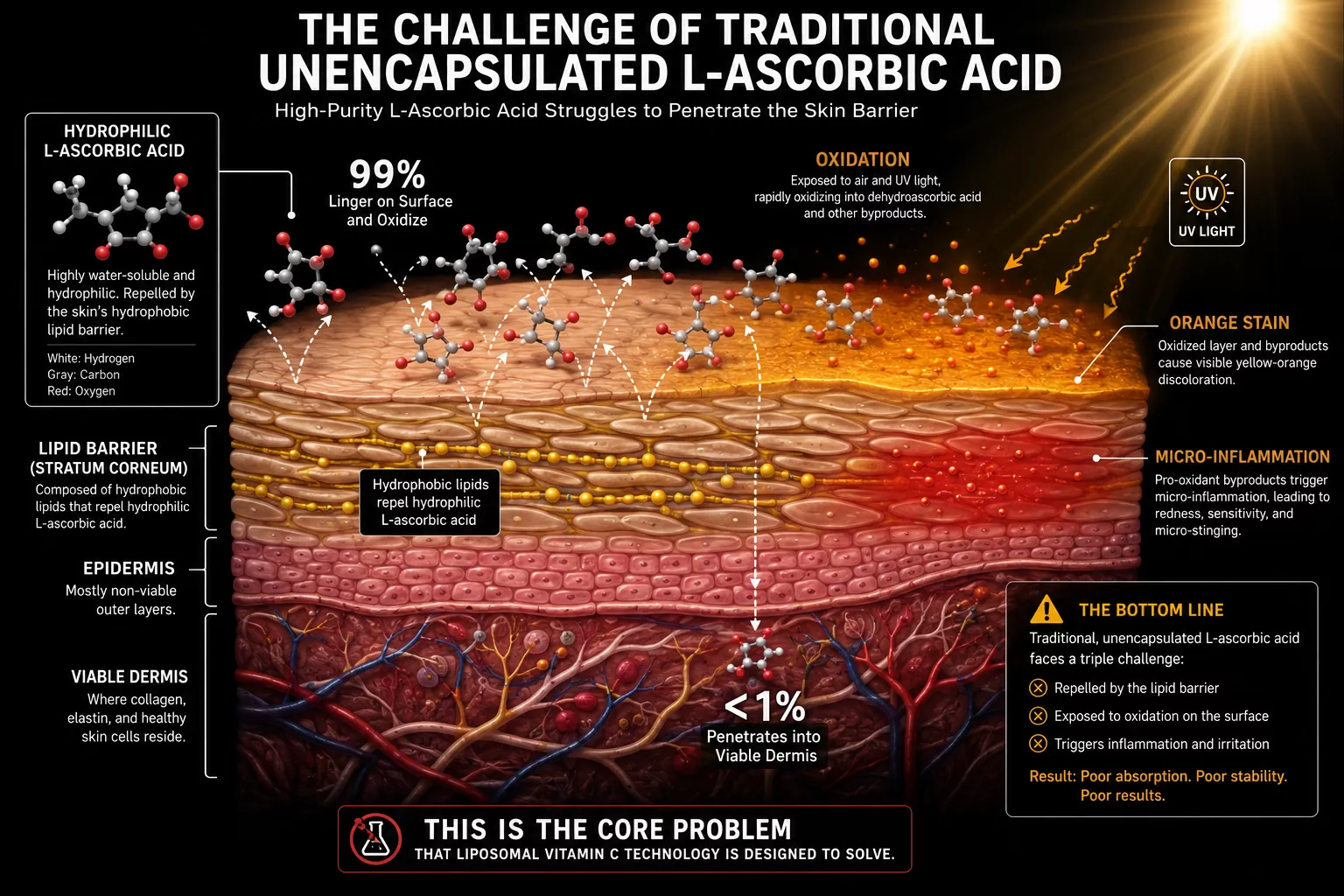
During peak summer climate shifts, integrating traditional vitamin C derivatives into a daily routine presents a highly frustrating formulation barrier. The skin’s outermost layer, the stratum corneum, functions as a highly sophisticated lipid-rich brick wall designed explicitly to keep water-soluble substances out.
Because standard pure vitamin C is fundamentally water-loving (hydrophilic), it cannot passively dissolve through the oil-loving (lipophilic) intercellular lipids that bind your skin cells together. In my years of analyzing trans-epidermal delivery rates and tracking patient cosmetic pilling phases, I have observed that less than 1% of unencapsulated L-ascorbic acid actually penetrates into the viable dermis where collagen remodeling occurs. The remaining 99% lingers idly on the surface of your face. Exposed to warm July air, humidity, and UV light, this residual acid rapidly oxidizes into dehydroascorbic acid.
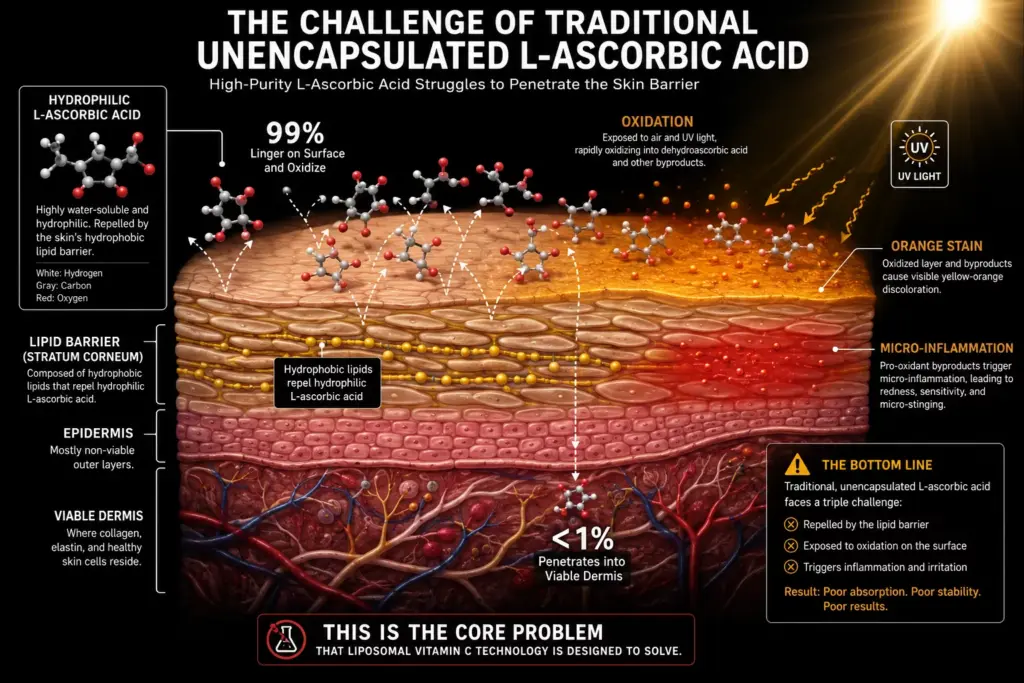
This structural degradation not only completely strips the molecule of its antioxidant value, but it also stains your dead surface cells a dull, sallow orange tone and generates secondary pro-oxidant byproducts that actively trigger micro-inflammation, redness, and unexpected breakouts. Piling on more unbuffered acid onto this structural barrier mismatch is entirely counterproductive; you are merely irritating the surface while leaving the deeper cellular matrix entirely starved of protection.
2. The Explanation: Decoding Liposomal Vitamin C Skin Science and Phospholipid Fusion
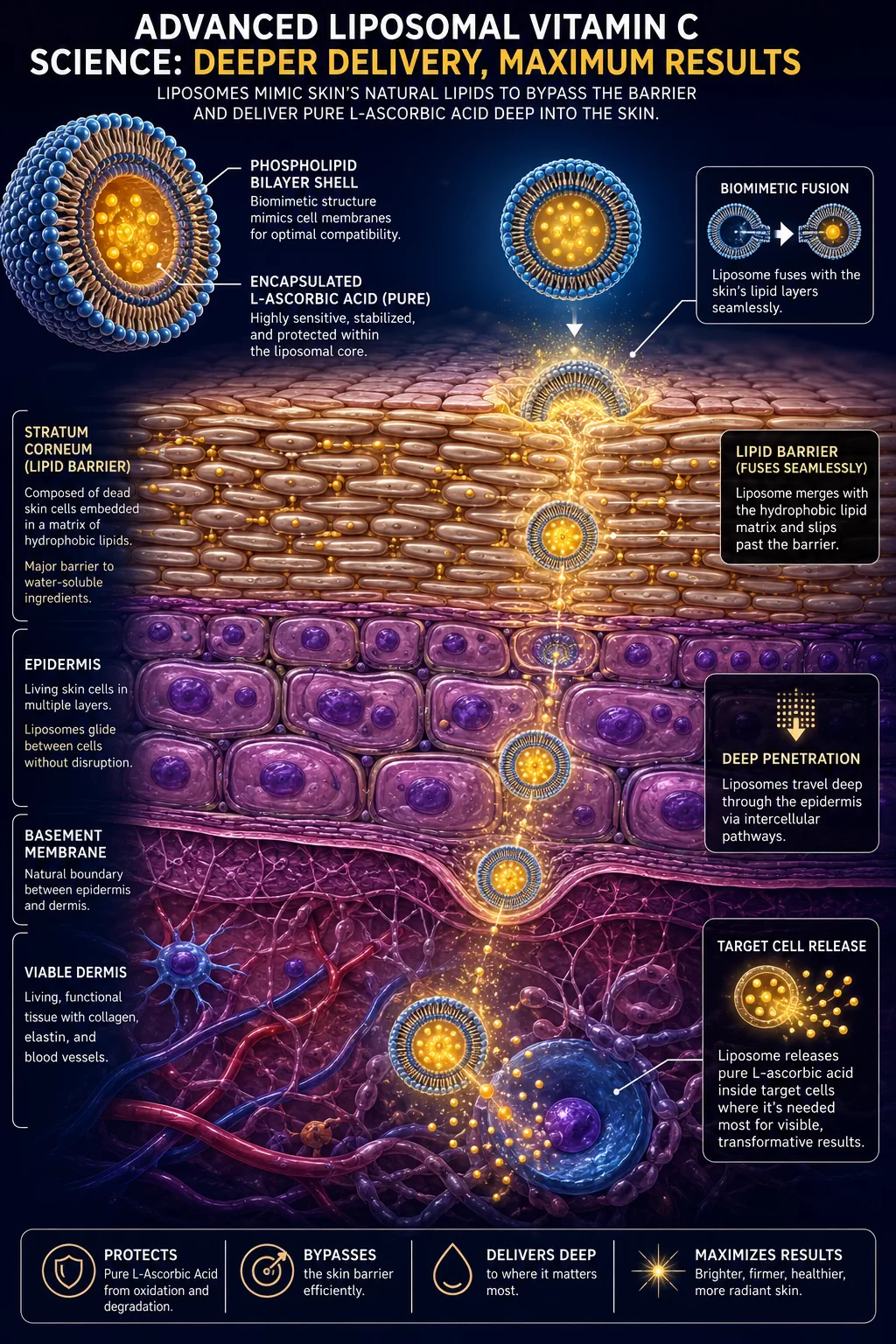
To comprehend how a microscopic encapsulation matrix can completely circumvent the epidermal filtration system, we must dive directly into the biophysics of liposomal vitamin C skin science. A liposome is a nano-sized, spherical vesicle engineered from a double layer of phospholipids—the exact same structural biomaterial that constitutes your native human cell membranes.
By core-encapsulating highly sensitive, pure L-ascorbic acid within this protective, biocompatible lipid bubble, the active molecule is granted an immediate biological passport through the skin barrier. Instead of being repelled by the stratum corneum’s hydrophobic layers, the outer phospholipid shell of the liposome seamlessly blends into the intercellular lipid matrix of the epidermis. This structural mimicry allows the vesicle to glide smoothly down through the tight junction networks without stripping your natural acid mantle or throwing off your surface pH balance.
Biophysical Comparison of Epidermal Diffusion Delivery Systems
| Delivery System Architecture | Lipid Bilayer Affinity & Penetration Depth | Intracellular Stability & Dermal Outcome |
| Standard Unencapsulated Acid | Hydrophilic / Repelled at Stratum Corneum | Extremely Low: Oxidizes on surface, causing irritation |
| Traditional Ascorbic Derivatives | Variable / Requires slow enzymatic conversion | Moderate: Stable but exhibits weak cellular potency |
| Liposomal Vitamin C Skin Science | Lipophilic Mimicry / Deep Viable Dermis Fusion | Maximum: Zero surface loss, direct target cell release |
Rather than acting as an aggressive, low-pH surface exfoliant, this bio-engineered vesicle completely alters the kinetics of ingredient absorption. To cross-reference how nanostructured lipid carriers and liposomal vesicles exponentially amplify the skin permeation, bioavailability, and cellular retention of volatile antioxidants without inducing localized tissue toxicity, you can review the clinical biomaterial trials documented on liposomal delivery vehicle efficiency by the National Institutes of Health. This definitive research data confirms that phospholipid encapsulation entirely eliminates the necessity for a highly acidic formulation pH, allowing sensitive skins to tolerate therapeutic doses of vitamin C easily.
In my practical formulation assessments, observing the rheological behavior of a high-purity liposomal fluid reveals a remarkable textural shift: because the active acid is completely shielded inside a velvety lipid membrane, the serum glides onto the skin with a soothing, milky, satin-like emolliency. Adopting an authentic routine built on liposomal vitamin C skin science ensures that the active core is safely delivered down to the fibroblast network before releasing its potent antioxidant payload, preserving your surface barrier integrity while maximizing internal skin longevity.
From a raw material procurement and consumer selection standpoint, discerning the authenticity of a liposomal fluid requires close inspection of its physical characteristics. True, clinically effective liposomal vitamin C skin science typically yields a slightly hazy, opalescent, or milky emulsion rather than a perfectly water-clear fluid, as the light naturally scatters when hitting the suspended nano-lipid vesicles. Furthermore, because these microscopic spheres lock the volatile ascorbic acid away from atmospheric oxygen, an authentic formula will maintain its pristine, creamy-white stability over months of use, showing zero signs of the rapid browning or the pungent, oxidized metal odor characteristic of degraded, unencapsulated vitamin C serums.
3. The Solution: Harnessing Liposomal Vitamin C Skin Science in a Smart Longevity Synergy Blueprint
The definitive solution to environmental photo-aging, dullness, and chronic barrier friction is establishing a highly synchronized skincare routine that pairs your nano-encapsulated vitamins with deep basal brighteners and surface-stabilizing shields. By structuring your morning and evening applications around complementary molecular delivery systems, you unlock an unshakeable, 360-degree glass skin bounce.
Through extensive tracking of cellular recovery timelines, I have found that incorporating liposomal vitamin C skin science into your morning routine effortlessly supercharges the efficacy of your existing skin longevity protocols. When you layer this lipid-cloaked vitamin directly over a clean face, its deep-penetrating antioxidant pool works in absolute harmony with our targeted glutathione-skin-science blueprint. Because glutathione acts as the cell’s native recycling engine, it continuously donates electrons back to oxidized vitamin C molecules within your tissue, converting them back into their active, working state and creating an endless, self-rejuvenating brightening loop right inside your basal layer.
Furthermore, you can seamlessly protect this deep-tier antioxidant factory from external environmental degradation by finishing your morning routine with our specialized ectoin defense protocol. While the liposomal spheres quietly repair your collagen structures from within, a topical ectoin matrix forms an unshakeable, dense water shield on the surface to deflect harsh summer climate friction and dry air-conditioning stress. This sophisticated synergy guarantees that your living tissue remains perfectly calm, structurally fortified, and radiant from the inside out all summer long.
FAQ: Liposomal Vitamin C Skin Science in Action
H3: Do I need to store a liposomal vitamin C serum in the refrigerator?
While standard vitamin C is notorious for oxidizing at room temperature, authentic liposomal vitamin C skin science utilizes a protective phospholipid shield that significantly enhances thermal and atmospheric stability. Storing it in a cool, dark vanity out of direct sunlight is perfectly sufficient; however, refrigeration can provide a refreshing, de-puffing sensory experience upon morning application.
H3: Can sensitive, acne-prone skin types use liposomal formulas?
Yes, absolutely. Traditional vitamin C serums require a highly disruptive, intensely acidic pH (typically below 3.5) to penetrate the skin, which frequently triggers breakouts and redness in sensitive profiles. Liposomal formulas bypass the need for acid-driven exfoliation by utilizing lipid membrane fusion, making them completely non-irritating, pH-neutral, and exceptionally soothing for acne-prone skin.
H3: Why does my liposomal vitamin C serum sometimes pill under sunscreen?
If you experience product pilling (balling up on the skin), it is usually caused by an emulsifier mismatch or applying your next layer too quickly. Because liposomal vitamin C skin science utilizes a rich phospholipid membrane matrix, these nano-spheres need approximately 60 to 90 seconds to fully fuse with your epidermal lipids. To prevent pilling, press the fluid gently into your skin rather than rubbing aggressively, and allow it to dry completely before sealing it with your daily sunscreen or protective barrier shield.
Medical Disclaimer
본 글에 제공된 정보는 피부 화장품 데이터와 리포좀 비타민 C 피부 과학 에 근거하여 교육 및 정보 제공 목적으로만 작성되었습니다. 만성 피부 질환이나 전신 질환에 대한 의학적 조언, 진단 또는 치료를 위한 것이 아닙니다. 새로운 활성 성분이나 고농도 국소 제제를 일상 관리 루틴에 추가하기 전에 반드시 피부과 전문의와 상담하십시오.