
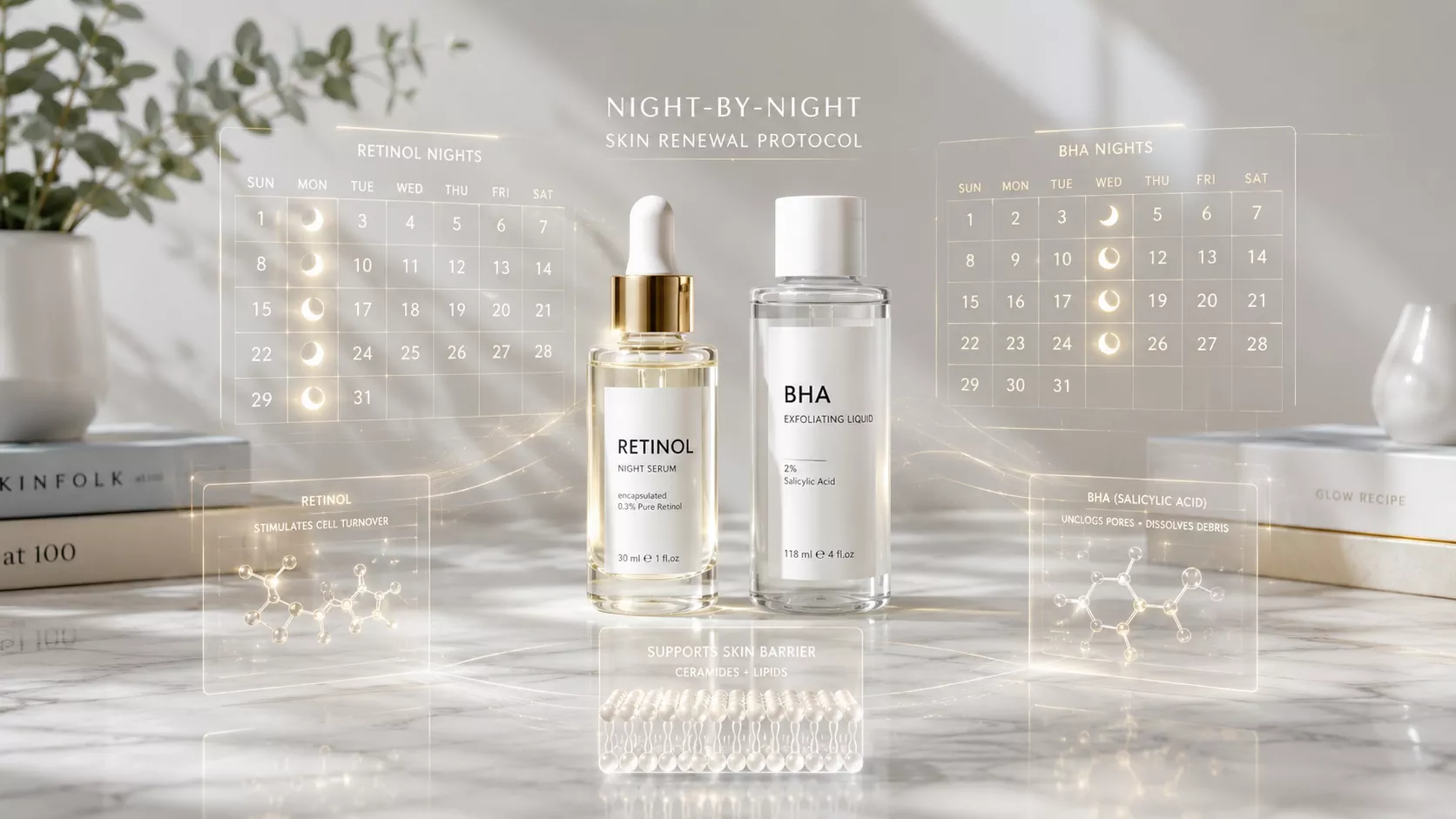
Have you ever woken up, looked in the mirror, and felt completely defeated by a dull, patchy complexion despite owning a vanity full of expensive products? You are not alone. In our collective obsession to achieve that seamless, airbrushed, and dew-drenched finish, most of us fall into the trap of over-complicating our rituals. We track down every viral active ingredient, hoping for a shortcut to a crystal-clear complexion.
But instead of that coveted translucent glow, we often end up with an angry, red, and irritated skin barrier that cannot hold onto water. If your face feels tight by midday and looks flaky under your foundation, your current nighttime regimen is failing to protect your skin from nocturnal dehydration. To turn things around, learning how to correctly implement a strategic skin cycling routine before your head hits the pillow is the ultimate game-changer.
Here at keditbeauty, we treat skincare as a balance between clinical precision and authentic self-care. During my time living in Seoul and collaborating with top-tier aesthetic clinics in Gangnam, I watched firsthand how Korean women approach skin health. They don’t chase aggressive, stripping treatments; instead, they focus on deep “moisture density.”
In this comprehensive trend report, we will deconstruct the biological reasons behind overnight moisture loss, explore why standard heavy creams often trigger breakouts, and deliver the exact solutions to master a personalized skin cycling routine that completely transforms your complexion while you sleep.
1. The Anatomy of Cellular Recovery: Why Your Epidermis Demands Rest
To understand the core philosophy behind a strategic skin cycling routine, you must understand that your cells do not repair themselves under a state of constant chemical stress. When you apply powerful acids or retinoids, you are essentially signaling your skin to shed old cells and accelerate its natural renewal pathway. However, this process temporarily thins the stratum corneum, leaving your deeper tissues highly vulnerable to environmental irritants and transepidermal water loss (TEWL).
When I first started experimenting with intensive anti-aging treatments, I made the amateur mistake of slathering on high-percentage retinol and chemical exfoliants every single night. Within three days, my face was a congested mess of tiny whiteheads, painful dry patches, and a stinging sensation whenever I applied a simple moisturizer. That is because overloading your tissue without giving it adequate structural downtime actively strips away its natural defense mechanisms.
True radiance cannot be faked with greasy layers when your skin is already compromised or over-exfoliated from harsh ingredient pairings—an issue we deeply analyzed in our scientific guide on how to repair skin barrier damage. Without built-in rest periods, your skin enters a state of chronic micro-inflammation, which completely halts collagen production and causes premature dullness rather than smoothness.
2. The Solution: The Strategic 4-Night Blueprint on How to Skin Cycle
The secret to a successful skin cycling routine relies on choosing a method that perfectly aligns with your skin’s daily moisture and recovery needs. Modern dermatological trends have moved away from the exhausting 10-step systems and consolidated into a calculated four-night recovery schedule. This ensures your active ingredients deliver maximum efficacy while keeping your epidermal matrix completely intact.
According to official dermatological consensus published by the National Institutes of Health, maintaining an optimal moisture balance via breathable barrier films is crucial for sustaining a healthy stratum corneum. To explore the deeper physiological parameters of topical moisture retention and structural recovery, you can review the official scientific guidelines on Skin Moisturizers and Occlusive Film Mechanics by the National Institutes of Health which details these protective structures.
By mastering this calculated schedule, you are intentionally dividing your evenings into two “treatment nights” followed by two “recovery nights” as follows:
- Night 1: The Exfoliation Phase (Prep the Canvas) – Use liquid leave-on exfoliants (AHAs/BHAs) to dissolve dead, lifeless cells and clear out debris from your pores.
- Night 2: The Retinoid Phase (Trigger Cellular Renewal) – Introduce a pea-sized amount of pure Retinol or Retinal to stimulate collagen synthesis and accelerate cellular turnover. (Pro-tip for beginners: If your skin still feels slightly sensitized, try the “sandwich method”—applying a thin layer of a basic hyaluronic acid moisturizer both before and after your retinol to create a buffer without dampening its structural benefits.)
- Nights 3 & 4: The Deep Recovery Phase (Rebuild the Matrix) – Strictly ban all active acids or retinoids. Flood your tissues with intense, soothing humectants (Hyaluronic Acid, Centella Asiatica) and raw structural lipids to restore the barrier.
3. The Clinical Skin Cycling Matrix: Nightly Product Allocations
To help you seamlessly organize your new routine, we have summarized the exact formulation types and clinical objectives for each phase of the cycle.
| Cycle Phase | Core Treatment Focus | Recommended Ingredient Types | Primary Biological Goal |
| Night 1: Exfoliate | Chemical Resurfacing | Salicylic Acid (BHA), Glycolic Acid (AHA) | Dissolve dead cells & clear pore lining |
| Night 2: Retinoid | Cellular Regeneration | Pure Retinol, Retinaldehyde, or Bakuchiol | Stimulate collagen & speed up turnover |
| Night 3: Recover | Barrier Restructuring | Ceramides, Niacinamide, Panthenol (B5) | Resynthesize deep moisture lipids |
| Night 4: Recover | Deep Lipid Sealing | Squalane, Snail Mucin, Centella Asiatica | Eliminate TEWL & plump tissue density |

Decoding the Rotational Schedule
This data table represents the tactical framework used by top clinical specialists to customize evening routines based on cellular recovery timelines.
- The Treatment Nights (Nights 1 & 2) rely on thin, strategic applications of powerful resurfacing agents. Clearing surface debris on Night 1 is highly strategic: it perfectly preps your canvas, allowing your subsequent retinoid on Night 2 to penetrate deeper and work with maximum efficiency.
- The Recovery Nights (Nights 3 & 4) utilize rich, emulsified lipid structures that form a breathable, protective blanket over dry tissues. Skipping Night 4 prematurely interrupts the skin’s natural lipid lipid synthesis cycle. The stratum corneum requires a minimum of 48 to 72 hours of uninterrupted barrier rest to fully recover its cellular cohesion after exposure to low-pH chemical peeling agents. If your skin feels exceptionally dehydrated during Night 4, it is the perfect opportunity to implement a plush korean glass skin routine technique, such as K-slugging with an herbal sleeping mask, to physically lock in moisture density before you restart the cycle.
Conclusion: Consistency Outlives Every Trend
Social media beauty trends come and go, but the foundational principle of a proper skin cycling routine remains absolute: respect your skin’s natural biology and prioritize deep, cellular hydration. True skincare mastery is never about using the strongest percentage or stripping your face until it shines from raw irritation. Stop over-treating your face out of panic, remain patient through the rotational phases, and give your skin the exact biological tools it needs to thrive. Stay consistent, protect your moisture barrier, and wake up to the naturally radiant, smooth, and balanced reflection you truly deserve.
FAQ (Frequently Asked Questions)
Q1. How long should I stay on a 4-night skin cycling routine before adjusting it?
A. For beginners or those with a sensitive skin profile, it is highly recommended to stay on the standard 4-night schedule for at least 4 to 6 weeks. This timeline directly aligns with your skin’s natural cellular turnover cycle, allowing your face to completely adapt to the rotation without shock. Once your skin builds a strong tolerance—meaning you experience zero redness, stinging, or flaking on your active nights—you can customize your schedule by dropping one recovery night, shifting to a 3-night cycle (Exfoliate, Retinol, Recover) for more advanced anti-aging results.
Q2. Can I use Vitamin C during a standard skin cycling routine?
A. Absolutely! Because Vitamin C is a powerful antioxidant that protects your skin from environmental free radicals and UV damage, it should be kept strictly within your Morning (AM) skincare routine. Applying Vitamin C every single morning provides a bright, protective shield for your cells, while your evening routine focuses entirely on heavy nocturnal resurfacing and structural repair while you sleep.
Q3. I just started skin cycling, and my skin is breaking out. Is this normal?
A. Yes, what you are experiencing is likely “skin purging,” not a negative allergic reaction. When you clear away dead skin cells on Night 1 and trigger rapid turnover on Night 2, the accelerated cellular renewal forces microcomedones (trapped gunk hidden deep within your pores) to rise to the surface all at once. This purging phase typically lasts around 2 to 4 weeks. However, if you experience burning, deep cystic acne in areas where you normally never break out, or severe flaking that hurts, it means your barrier is compromised. In that case, temporarily pause your active nights and extend your deep recovery phase into a full week of intensive lipid barrier repair.
Disclaimer
The information provided on keditbeauty is for educational and informational purposes only and should not be construed as professional medical advice, diagnosis, or treatment. Always seek the advice of a qualified dermatologist or skincare professional with any questions you may have regarding a medical condition or specific skin concerns. Individual results may vary depending on skin type, sensitivity, and proper application. Reliance on any information provided in this article is solely at your own risk.