
When you first dive into the world of K-beauty, you quickly learn about the ultimate holy-grail ingredients that promise to grant you that coveted, lit-from-within glass skin. Naturally, my own vanity soon became lined with aesthetic, minimalist bottles, with Hyaluronic Acid (HA) taking absolute center stage. It promised to hold up to 1,000 times its weight in water, and I was ready to drown my skin in it.
But a few weeks into my heavy HA routine, I hit a frustrating wall. Despite slathering on expensive hydrating serums, my face felt strangely tight, flaky, and dry just hours later. It was a classic skincare paradox: the more hydration I applied, the more dehydrated my skin became.
Through my personal trial and error, I found this dehydration trap hits hardest during long-haul flights, in dry climates, or while sitting directly under HVAC vents in heavily heated winter offices. If you are struggling with that persistent, underlying tightness, you aren’t alone, and your products aren’t necessarily broken. The real culprit hides within a critical, often-overlooked scientific detail: Hyaluronic Acid Molecular Weight. Applying the wrong molecular size or layering it without a strategic blueprint can reverse its benefits, pulling vital moisture out of your skin.
In this comprehensive guide, we will look past the marketing hype, break down the molecular science of HA sizes, and share a foolproof layering routine to unlock deep, cellular hydration without the tight aftermath.
1. The Dehydration Trap: Why High Percentages Aren’t Enough
Many of us fall into the “more is better” trap, thinking a 2% or 3% pure hyaluronic acid serum will solve all our moisture woes. However, in skin science, chemistry dictates the rules. When I was dealing with severe internal tightness, I learned the hard way that a high concentration doesn’t guarantee deep absorption.
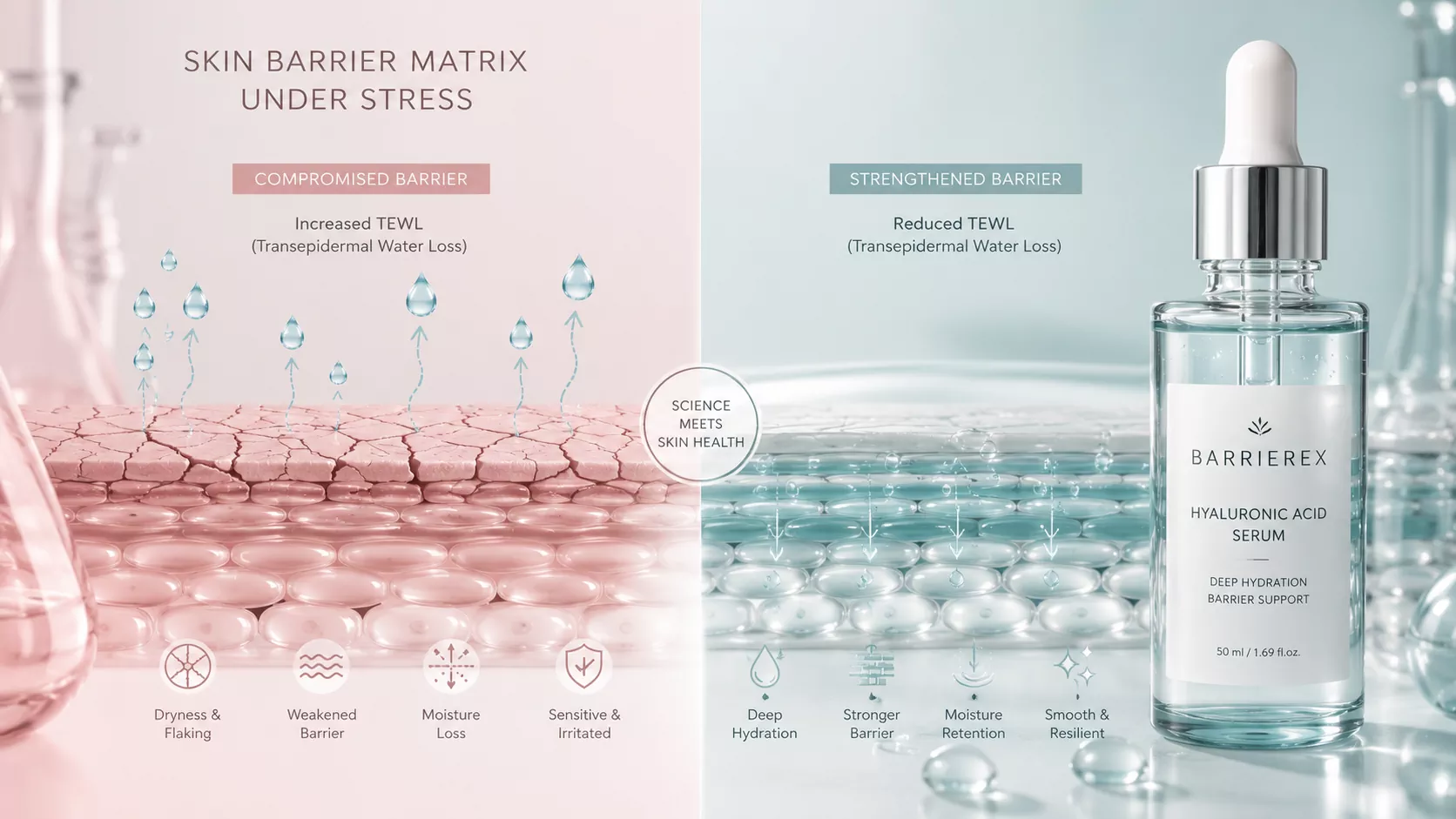
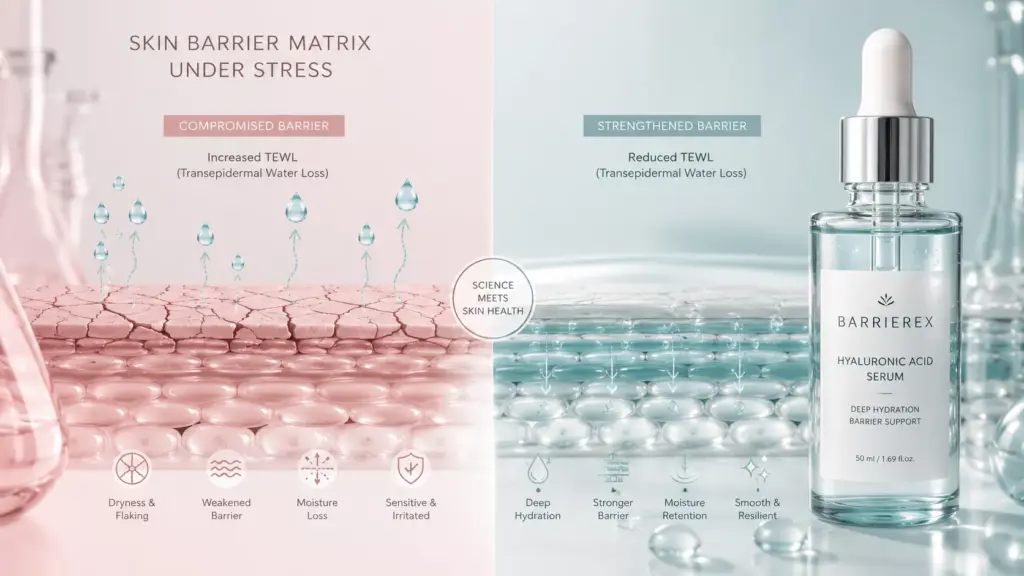
Hyaluronic acid is a powerful humectant, meaning it acts like a molecular sponge—it aggressively draws moisture from its closest surroundings to bind to itself. If you apply a high-concentration HA serum onto bone-dry skin, the molecule cannot find moisture in the air. Instead, it turns inward, greedily pulling water from the deeper layers of your dermis up to the surface. Once that surface water evaporates, your skin barrier is left significantly more dehydrated and chemically stripped than before, triggering transepidermal water loss (TEWL).
To counteract this, if you are stuck in a dry office environment, misting your face with pure water or a botanical hydrosol right before your serum creates an artificial humid micro-climate for the molecules to feed on, completely saving your barrier from internal tightness.
2. The Science of Size: Breaking Down Hyaluronic Acid Molecular Weight
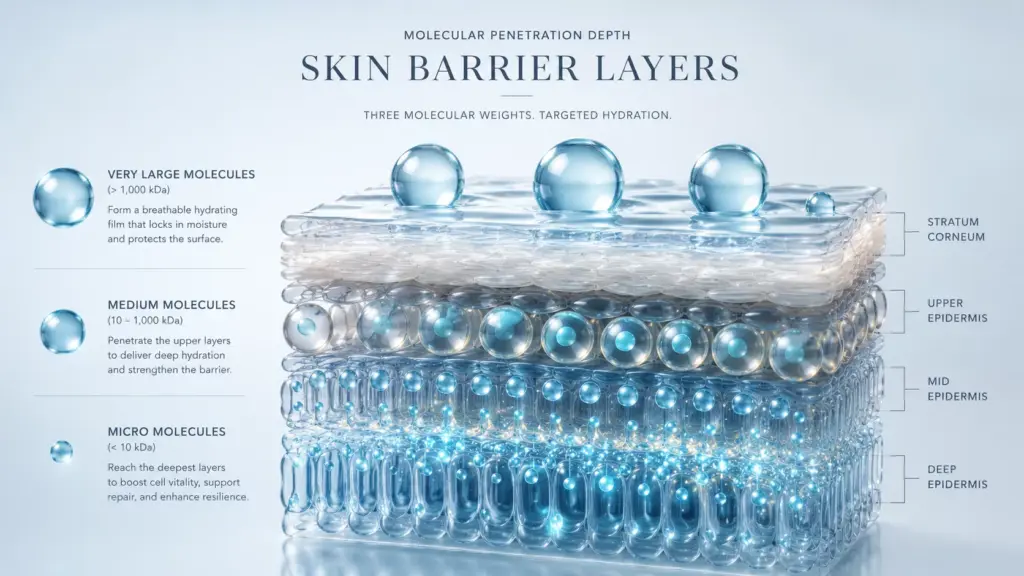
To effectively heal this tight sensation, we must examine the ingredient through a biological lens. The term “hyaluronic acid” actually covers an entire spectrum of molecular sizes, measured in Daltons (Da). Your skin barrier is highly selective, and the specific Hyaluronic Acid Molecular Weight determines exactly how deeply the ingredient can penetrate your stratum corneum.
High Molecular Weight (HMW-HA)
- Size: 1,500,000 Daltons (1.5M Da) or higher.
- Mechanism: These molecules are physically too large to pass through the lipid matrix. Instead, they sit on the very surface of your skin, creating a breathable, invisible moisture blanket. While it delivers immediate surface-level plumping and instantly smooths fine lines, it provides zero deep, long-term cellular hydration.
Medium Molecular Weight (MMW-HA)
- Size: 100,000 to 600,000 Daltons (100K to 600K Da).
- Mechanism: These intermediate molecules cross into the upper layers of the epidermis. They are crucial for reinforcing your natural moisture shield and supporting the intercellular lipids to prevent environmental evaporation.
Low & Ultra-Low Molecular Weight (LMW-HA / ULMW-HA)
- Size: 50,000 Daltons down to 2,000 Daltons (Below 50K Da).
- Mechanism: Thanks to their tiny molecular structure, these fragments slip through the skin’s defense pathways, traveling deep into the lower epidermis. According to clinical data, LMW-HA triggers deeper cellular hydration and signals your skin to boost its own natural collagen synthesis.
When scanning your product’s INCI list, don’t just look for “Hyaluronic Acid”. To ensure you are getting a strategic mix of sizes, look for these specific chemical names written by formulators: Sodium Hyaluronate (typically High), Hydrolyzed Hyaluronic Acid (Low), and Sodium Hyaluronate Crosspolymer (Surface matrix protection). To explore the deeper clinical efficacy and safety parameters of low molecular weights, you can review the extensive research on Topical Hyaluronic Acid Structural Impacts by the National Institutes of Health which outlines its biological behavior.
3. The Multi-Depth Blueprint: How to Layer for Lasting Radiance
Once I understood the physics of Hyaluronic Acid Molecular Weight, I completely reconstructed my routine. To get that juicy, plump look without the irritation, you must practice a concept called multi-depth layering. This approach ensures that every layer of your skin receives the exact molecular size it needs to thrive.
- Step 1: The Damp Base (Non-Negotiable): Never apply HA to dry skin. After cleansing with a low-pH, non-foaming milk cleanser, leave your canvas slightly damp. This gives the humectant molecules an immediate external water source to absorb.
- Step 2: Choose a Multi-Molecular Formulation: Avoid single-size serums. Look for a clean K-beauty formulation that explicitly lists multiple forms of HA. This ensures deep penetration and surface protection simultaneously.
- Step 3: Seal with a Lipid Matrix: Humectants hold water, but they cannot lock it in forever. While your face is still plump and bouncy, immediately apply a rich barrier cream utilizing a 3:1:1 physiological lipid ratio (Ceramides, Cholesterol, Free Fatty Acids). This creates an occlusive seal, blocking TEWL and keeping your skin hydrated for over 24 hours. For a step-by-step guide on fixing a severely stripped moisture shield before starting your hydration layering, check out our previous breakdown on How to Repair Skin Barrier Damage.
4. Molecular Weight Comparison & Skin Matrix Impact
Below is a scientific breakdown of how different molecular weights behave on your skin barrier, helping you choose the right formulation for your routine.
| Molecular Weight Category | Structural Size (Daltons) | Penetration Depth | Primary Skin Benefit | Best Used For |
| High (HMW-HA) | 1.5M Da+ | Outermost Surface Only | Film-forming, instant smoothing, barrier defense | Instant glow, daytime environment protection |
| Medium (MMW-HA) | 100K to 600K Da | Upper Epidermal Layers | Strengthens moisture shield, daily hydration retention | Sustained moisture, plumping fine lines |
| Low (LMW-HA) | Below 50K Da | Deep Lower Epidermis | Deep cellular hydration, collagen signal booster | Improving elasticity, treating chronic tight skin |
Understanding the Data Table
This comparison matrix highlights that relying on a single type of hyaluronic acid will leave your hydration routine incomplete. High molecular weight (1.5M Da+) acts as a defensive shield on the surface but leaves the deeper layers parched. Conversely, low molecular weight (below $50\text{K Da}$) sinks deep to repair the structural moisture deficit but lacks the surface film-forming capability to fight immediate environmental evaporation.
For 2026 women looking to maximize their glass skin goals, the ultimate takeaway is clear: always look for “Multi-Molecular Weight” or “Complex Hyaluronic Acid” on your ingredient labels to ensure your skin is thoroughly saturated from the surface down to the cellular foundation.
Conclusion: Depth Over Marketing Hype
Achieving true skincare mastery is all about understanding how ingredients function at a cellular level and giving them the correct biological environment to perform. By embracing the science of Hyaluronic Acid Molecular Weight and always pairing your humectants with a protective ceramide seal, you smoothly shift your skin from a state of tight dehydration to an authentic, long-lasting glow. Stay consistent, keep your canvas damp, and prioritize structural health over quick fixes. Your skin barrier will reward you with undeniable resilience.
FAQ (Frequently Asked Questions)
Q1. How can I tell if my hyaluronic acid product uses multiple molecular weights?
A. Look closely at the ingredient list (INCI list) on the back of the bottle. If it only lists “Hyaluronic Acid” or “Sodium Hyaluronate,” it likely uses a single, high molecular weight. If it contains terms like Hydrolyzed Hyaluronic Acid, Sodium Acetylated Hyaluronate, Hyaluronic Acid Crosspolymer, or Potassium Hyaluronate, it is a high-quality, multi-molecular weight formulation designed for multi-depth penetration.
Q2. Can I use Hyaluronic Acid in the same routine as Retinol and Vitamin C?
A. Absolutely! In fact, it is highly recommended. Hyaluronic acid acts as a soothing buffer. In the morning, apply it right after your Vitamin C to boost hydration and prevent environmental stress. At night, using it before your Retinol (ensuring the skin dries completely before the retinoid step) or using the “sandwich method” with a ceramide cream helps significantly reduce the redness and flaking typically caused by strong vitamin A derivatives.
Q3. Is Hyaluronic Acid safe for acne-prone or highly sensitive skin types?
A. Yes, pure hyaluronic acid is naturally bio-compatible and completely non-comedogenic, meaning it will not clog pores or trigger hormonal blemishes. However, ensure the product is formulated without denatured alcohol, synthetic fragrances, or essential oils, as these added irritants can easily trigger contact dermatitis on an already sensitive or compromised skin barrier.
Disclaimer
The information provided on keditbeauty is for educational and informational purposes only and should not be construed as professional medical advice, diagnosis, or treatment. Always seek the advice of a qualified dermatologist or skincare professional with any questions you may have regarding a medical condition or specific skin concerns. Individual results may vary depending on skin type, sensitivity, and proper application. Reliance on any information provided in this article is solely at your own risk.