
If you are navigating high-performance skincare in your late twenties or early thirties, you have likely encountered the infamous “Vitamin C struggle.” We are constantly told that L-Ascorbic Acid is the gold standard for brightening dull skin, fading post-acne dark spots, and boosting collagen. Yet, for many with sensitive or reactive skin barriers, traditional L-Ascorbic Acid serums are a recipe for disaster. They oxidize into a murky orange-brown in your cabinet within weeks, smell metallic, and often trigger severe stinging, flushing, or sudden breakouts due to their highly acidic pH.
I remember reaching a frustrating plateau in my own routine when I tried to force traditional L-Ascorbic Acid formulas to work. Every morning, applying a low-pH pure Vitamin C serum left my cheeks red, inflamed, and prone to micro-breakouts. When I stopped using it, my skin lost its luminosity; when I restarted, my moisture barrier compromised again. The issue was not that my skin did not need antioxidant defense—it was that water-soluble, highly acidic Vitamin C could not penetrate my skin’s lipid barrier without causing structural trauma.
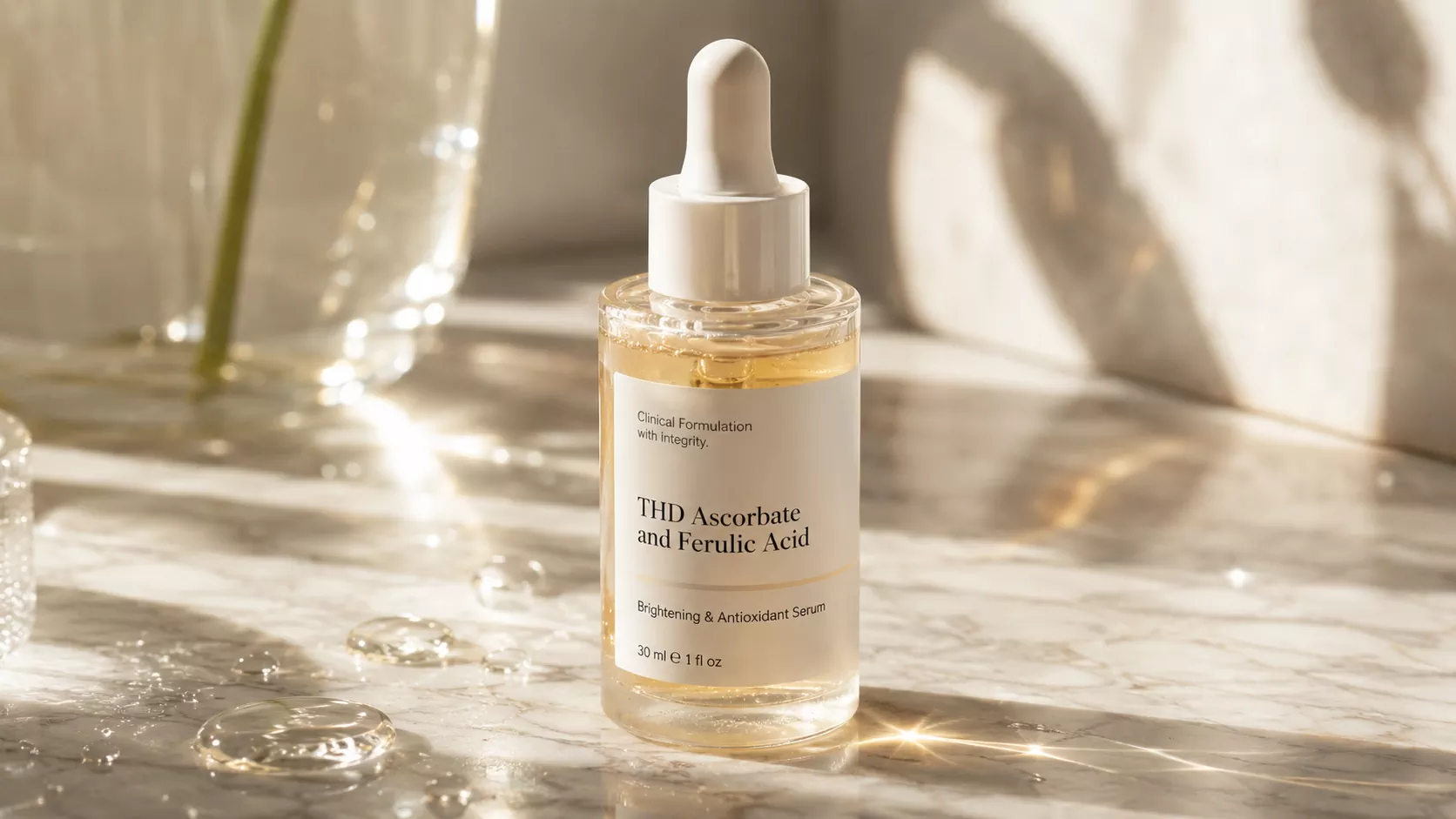
Everything changed when I shifted from fragile, water-soluble acids to lipid-soluble, bio-compatible antioxidants. Deep dermal brightening and free-radical protection require an active ingredient that glides through the skin’s natural lipid bilayer at a neutral pH. This is precisely why pairing THD Ascorbate and Ferulic Acid has emerged as the most advanced, medically sound protocol for achieving a luminous, even skin tone without compromising barrier integrity.
1. The Molecular Science of THD Ascorbate and Ferulic Acid
To understand why integrating THD Ascorbate and Ferulic Acid produces far superior stability and dermal absorption compared to traditional L-Ascorbic Acid, we must examine their unique biochemical behavior within the skin structure.
Traditional Vitamin C (L-Ascorbic Acid) is water-soluble (hydrophilic) and highly unstable. It requires a very acidic pH (below 3.5) to penetrate the stratum corneum, which inevitably disrupts the acid mantle. In contrast, THD Ascorbate (Tetrahexyldecyl Ascorbate) is a lipid-soluble (lipophilic) analog of Vitamin C.
When applied topically, this advanced antioxidant duo operates through three distinct physiological mechanisms:
- Enhanced Dermal Penetration via Lipid Affinity: Because the stratum corneum is composed of hydrophobic lipids, THD Ascorbate’s lipid-soluble structure allows it to penetrate up to 50 times more effectively than water-soluble L-Ascorbic Acid. Once inside the dermis, intracellular enzymes break off its protective isoprenoid chains, converting it into active Vitamin C directly where collagen synthesis takes place.
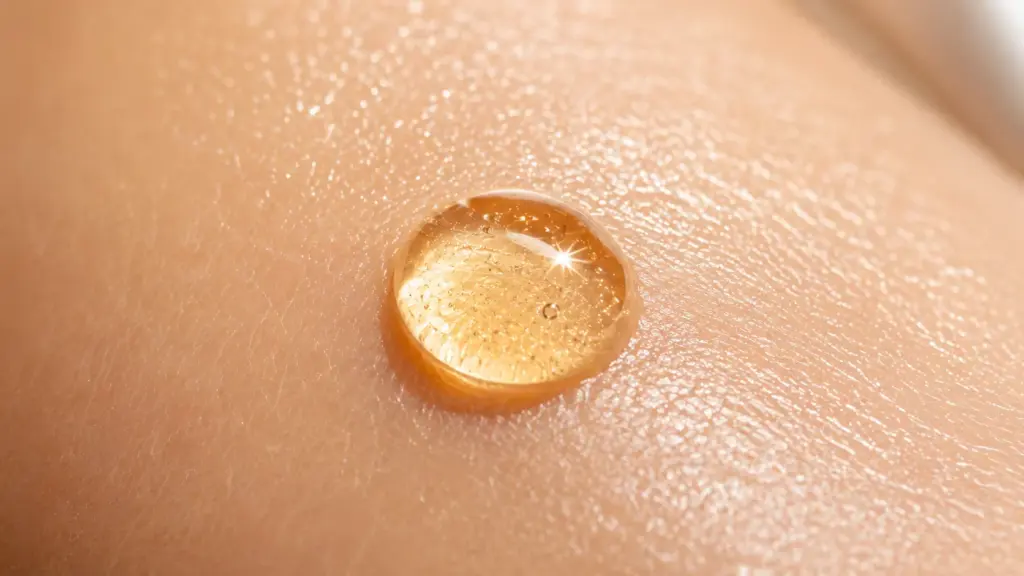
- Neutral pH Stability and Barrier Protection: THD Ascorbate functions effectively at a skin-neutral pH (5.5–6.5). This completely eliminates the stinging, flushing, and acid-induced barrier breakdown associated with traditional Vitamin C, making it exceptionally safe for sensitive or compromised skin.
- Synergistic Radical Scavenging with Ferulic Acid: Ferulic Acid is a potent plant-derived phenolic antioxidant. When combined with THD Ascorbate, Ferulic Acid neutralizes free radicals generated by UV radiation and blue light while dramatically stabilizing the overall formulation against oxidation. This synergy prevents lipid peroxidation and protects delicate dermal collagen fibers from oxidative degradation.
2. Clinical Evidence on Lipophilic Antioxidants and Collagen Synthesis
The therapeutic efficacy of lipophilic Vitamin C derivatives combined with phytochemical antioxidants is firmly supported by dermatological research. Scientific literature confirms that lipid-soluble delivery systems penetrate deeper into the dermis to stimulate extracellular matrix proteins while mitigating environmental stress.
According to recent clinical investigations evaluating topical vitamin C derivatives and photoprotective antioxidant complexes, lipophilic ascorbate formulations demonstrated significant stimulation of Type I collagen synthesis, notable reductions in melanogenesis, and enhanced protection against UV-induced erythema. Measurements confirmed that lipid-compatible antioxidants maintain high stability and cellular bioavailability without triggering cutaneous irritation.
To integrate this advanced antioxidant protocol into your daily morning routine for maximum radiant absorption, follow this structured application method:
Step 1: Gentle Cleansing and Hydration Base
Start with a gentle, hydrating cleanser that cleanses without stripping natural oils. Pat skin dry or leave slightly damp. Ensure your skin barrier is calm; if you are recovering from recent irritation, pair your morning routine with calming active support. Read our guide on Ectoin and Barrier Repair to see how cellular hydro-shields prepare vulnerable skin for active antioxidant therapies.
Step 2: Applying the Lipophilic Antioxidant Fluid
Dispense 3–4 drops of your THD Ascorbate and Ferulic Acid serum onto clean fingertips. Smooth evenly over the face, neck, and décolletage. Because THD Ascorbate is oil-compatible, it absorbs effortlessly into the skin, leaving a velvety, luminous sheen rather than a tacky residue.
Step 3: Daytime Photoprotection and Moisture Lock
Follow with a lightweight barrier cream and a broad-spectrum sunscreen (SPF 30 or higher). Ferulic Acid and THD Ascorbate work in direct synergy with sunscreen filters during morning application, maximizing your daily defense against UV-induced free radicals and environmental oxidative stress throughout the day.
3. Comparative Breakdown: L-Ascorbic Acid vs. THD Ascorbate Protocol
To clarify how this advanced lipid-soluble protocol compares to traditional Vitamin C formulations, review this straightforward breakdown of their mechanisms and clinical performance:
| Metric / Feature | Pure L-Ascorbic Acid | Sodium Ascorbyl Phosphate (SAP) | THD Ascorbate Protocol (THD Ascorbate and Ferulic Acid) |
| Solubility Profile | Water-soluble (Hydrophilic) | Water-soluble (Hydrophilic) | Lipid-soluble (Lipophilic) |
| Required pH Range | Highly acidic (pH <3.5) | Neutral to alkaline (pH 6.0–7.0) | Skin-neutral (pH 5.5–6.5) |
| Dermal Penetration Depth | Surface to upper epidermis | Superficial epidermal layers | Deep dermal layer penetration |
| Formula Oxidation Speed | Rapid (Turns orange in 4–8 weeks) | Moderate stability | Extremely stable (Minimal oxidation) |
| Irritation Potential | High (Stinging, redness, flaking) | Very Low | Zero / Extremely gentle |
| Primary Target Outcome | Surface exfoliation & mild glow | Acne-prone skin clarification | Deep collagen boost, spot fading, & non-irritating glow |
4. Advanced Application Rules and Compatibility
Seamless Layering across Your Routine
Unlike water-soluble L-Ascorbic Acid, which conflicts with ingredients like Niacinamide or delicate peptides due to its low pH, THD Ascorbate and Ferulic Acid play remarkably well with others. Because it operates at a neutral pH, you can safely layer it alongside Niacinamide, Peptides, or Hyaluronic Acid without risking flushing or active neutralization. Use it every morning under SPF to maximize your defense against UV-induced free radicals and urban pollution.
5. Conclusion: The Future of Gentle, Lipophilic Radiance
Achieving a bright, luminous, and youthful complexion does not require subjecting your skin to burning acidic serums or unstable formulas that turn yellow in a month. By embracing the advanced chemistry of THD Ascorbate and Ferulic Acid, you can deliver high-potency Vitamin C deep into your dermis where it matters most. Nourishing your skin with lipid-compatible antioxidants ensures your barrier remains calm, resilient, and glowing every single day.
Medical Disclaimer
The information provided in this article is for educational and informational purposes only and should not be construed as professional medical advice, diagnosis, or treatment. Always seek the advice of your dermatologist or other qualified health provider with any questions you may have regarding a specific skin condition or cosmetic protocol.