
As you navigate your late twenties and early thirties, maintaining youthful skin is no longer just about surface-level hydration or light exfoliation. You begin to notice subtle shifts: skin takes longer to bounce back after a long week, micro-texture feels slightly less refined, and post-inflammatory marks from minor breakouts linger far past their welcome. These signs indicate a slowdown in your skin’s natural repair cascade and a decline in endogenous growth factors. While active exfoliants and retinoids are popular for forcing cellular turnover, relying solely on aggressive resurfacing without restoring structural integrity can leave your skin barrier perpetually compromised and vulnerable to chronic micro-inflammation.
I remember hitting a wall with my own skincare journey when I attempted to erase early expression lines by layering high-strength exfoliants and potent actives every single night. Instead of achieving a smooth glass skin finish, my face became red, dry, and unable to hold moisture. My skin wasn’t lacking cell turnover—it was suffering from a breakdown in deep cellular repair signaling.
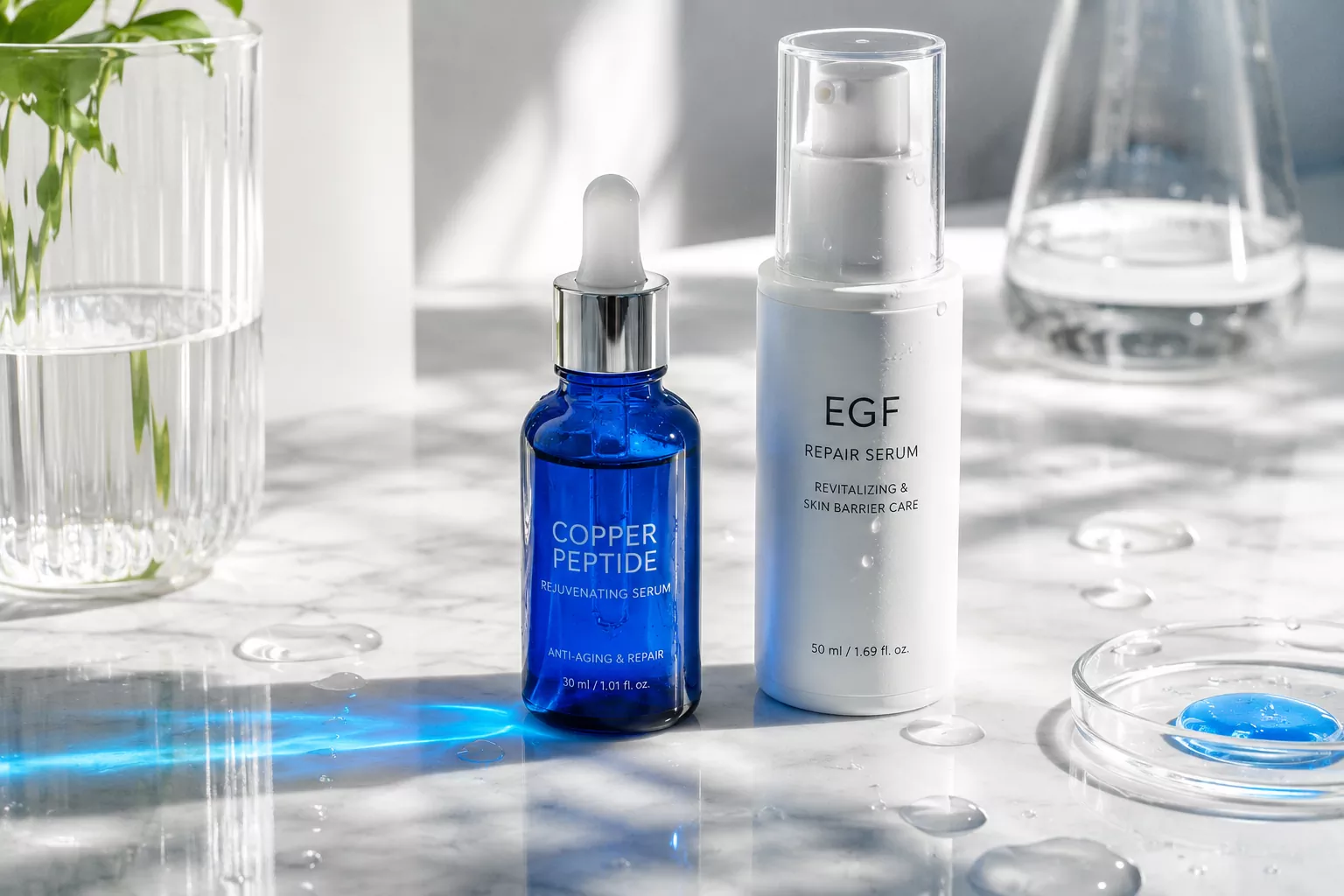
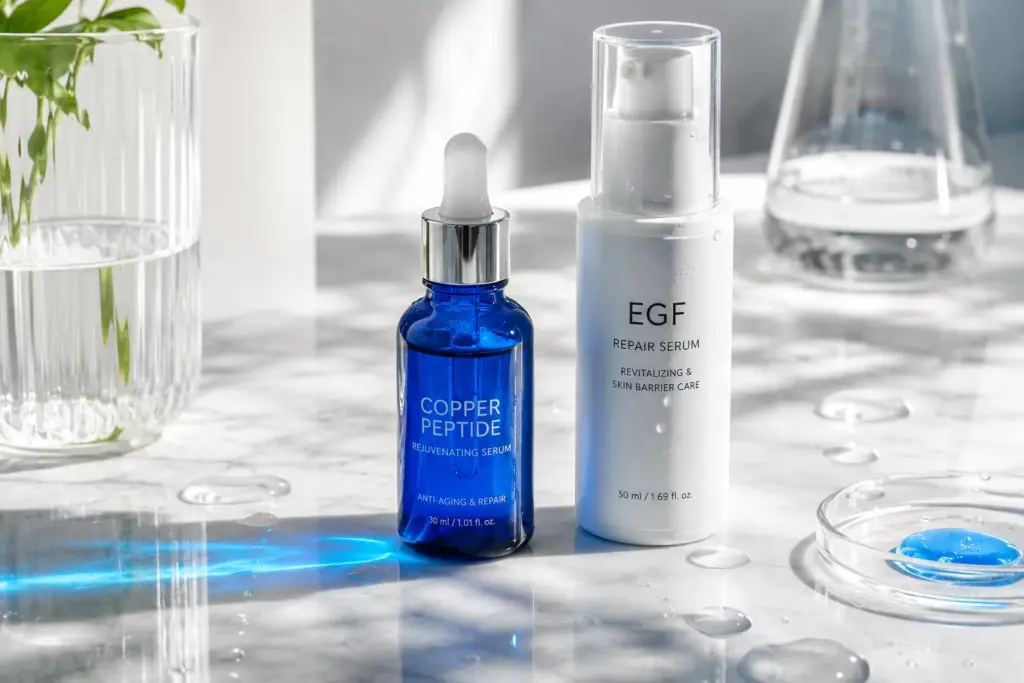
Everything shifted when I pivoted from aggressive resurfacing to bio-mimetic structural support. True skin density relies on cellular renewal paired with extracellular matrix (ECM) reconstruction. This is precisely why pairing Copper Peptides and EGF (Epidermal Growth Factor) has emerged as the most advanced, medically sound protocol for deep dermal remodeling and long-term elasticity.
1. The Physiological Synergy of Copper Peptides and EGF
To understand why using Copper Peptides and EGF together yields far superior results than using either compound in isolation, we must examine how they function within the skin’s biological repair cycle.
When your skin experiences environmental stress or age-related slowdowns, two distinct healing mechanisms must be activated:
- Epidermal Mitogenesis (Surface Renewal): The upper layer of your skin requires specific biological signals to stimulate keratinocyte proliferation and accelerate wound healing. EGF (Epidermal Growth Factor) is a single-chain protein that binds directly to Epidermal Growth Factor Receptors (EGFR) on cell surfaces. This binding triggers cellular division, speeds up epidermal regeneration, and rapidly restores damaged barrier tissue.
- Dermal Matrix Remodeling (Deep Structural Support): Beneath the surface, the extracellular matrix requires enzymatic regulation and collagen rebuilding. Copper Peptides (specifically GHK-Cu) act as signal peptides and carrier complexes. They stimulate fibroblasts to synthesize Type I collagen, elastin, and glycosaminoglycans (GAGs) like hyaluronic acid. Crucially, GHK-Cu also regulates matrix metalloproteinases (MMPs)—the enzymes responsible for breaking down damaged, misaligned collagen fibers—allowing healthy, organized tissue to take its place.
When combined into a single, cohesive routine, these two powerhouses target two distinct layers of the skin simultaneously:
- Dual-Layer Skin Architecture: EGF works from the top down to regenerate the epidermal surface and smooth texture, while Copper Peptides work from the bottom up to rebuild dermal density and structural support.
- Accelerated Barrier Recovery: EGF seals surface micro-tears and quenches epidermal inflammation, allowing Copper Peptides to penetrate effectively without triggering neurogenic stinging or inflammation.
2. Clinical Evidence on Dermal Remodeling and Growth Factors
The therapeutic efficacy of combining growth factors with copper-binding peptides is firmly backed by dermatological research. Scientific literature confirms that biomimetic peptides and recombinant proteins work in tandem to restore tissue architecture without relying on harsh chemical trauma.
According to recent clinical investigations evaluating bioactive growth factors and signal peptide complexes, topical formulations incorporating targeted growth signaling demonstrated significant increases in dermal thickness, improved elastic fiber density, and accelerated wound recovery. Measurements confirmed that growth factor signaling pathways actively promote cell survival and extracellular repair while mitigating inflammatory markers.
To integrate this tissue-repair protocol into your daily routine for maximum cellular absorption, follow this structured application method:
Step 1: Cleansing and pH Preparation
Start with a gentle, low-pH cleanser. Growth factors and peptides are delicate protein chains that can denature in highly acidic or overly alkaline environments. Avoid applying them immediately after strong direct acids (like glycolic or salicylic acid).
Step 2: Applying the Bio-Engineered Complex
Apply your EGF serum to clean, slightly damp skin. Allow it 1–2 minutes to absorb and bind to cell receptors. Follow with your Copper Peptide serum. Many modern formulations combine both ingredients into a single stabilized fluid to streamline cellular delivery.
Step 3: Sealing the Dermal Matrix
Lock in these active repair signals with a barrier-reinforcing cream. If you are using active retinoids in your broader anti-aging strategy, ensure your skin’s structural foundation is fortified first. Read our comprehensive guide on pairing Peptides and Retinol to learn how cell-signaling peptides cushion retinoid activity and prevent barrier breakdown.
3. Comparative Breakdown: Single-Active vs. Dual-Regeneration Protocol
To clarify how this dual protocol compares to single-ingredient therapies, review this straightforward breakdown of their mechanisms and clinical outcomes:
| Metric / Feature | EGF Alone | Copper Peptides Alone | Combined Protocol (Copper Peptides and EGF) |
| Primary Target Layer | Epidermis (Surface skin) | Dermis (Deep extracellular matrix) | Complete Dual-Layer Architecture |
| Main Cellular Action | Stimulates cell proliferation & wound repair | Synthesizes collagen, elastin, & GAGs | Rapid surface recovery + deep tissue remodeling |
| Texture & Smoothness | Smooths surface micro-roughness quickly | Improves firmness & long-term elasticity | Maximum smoothness, firmness, and bounce |
| Irritation Profile | Non-irritating / Soothing | Generally gentle (may sting sensitive skin) | Extremely soothing & barrier-supportive |
| Best For | Post-procedure recovery, micro-damage | Loss of firmness, fine lines, scar remodeling | Complete anti-aging, barrier repair, & skin density |
Advanced Application Rules and Precautions
Avoiding Ingredient Incompatibilities
While Copper Peptides and EGF are deeply restorative, they require proper formula compatibility. Do not mix Copper Peptides in the same step with pure L-Ascorbic Acid (Vitamin C) or strong Direct Acids (AHA/BHA). High acidity causes copper ions to separate from the peptide chain (chelating), rendering both actives ineffective and potentially causing skin irritation. Use Vitamin C or exfoliants in the morning, and reserve your Copper Peptide and EGF protocol for your evening repair routine.
4. Conclusion: The Future of Smart Cellular Repair
Achieving dense, resilient, and smooth skin doesn’t require putting your skin barrier through constant irritation. By understanding the biological synergy of Copper Peptides and EGF, you can elevate your anti-aging routine into a high-performance, tissue-regenerating protocol. Combining surface-level epidermal growth with deep dermal remodeling ensures your skin remains firm, bouncy, and radiant from the inside out.
Medical Disclaimer
The information provided in this article is for educational and informational purposes only and should not be construed as professional medical advice, diagnosis, or treatment. Always seek the advice of your dermatologist or other qualified health provider with any questions you may have regarding a specific skin condition or cosmetic protocol.