
If you have entered your late twenties or early thirties, chances are your skincare goals have subtly shifted. You are no longer just fighting occasional breakouts; you are actively looking to preserve dermal volume, refine skin texture, and protect your collagen matrix from premature degradation. Naturally, your search leads you to retinol—the undisputed gold standard ingredient in anti-aging dermatology. But if you have ever introduced high-potency retinoids into your routine, you are likely familiar with the dreaded “retinoid purge”: dryness, flaking, redness, and a severely compromised skin barrier.
As someone who spent months struggling through retinoic acid irritation, I used to believe that peeling and redness were mandatory rites of passage for achieving smooth skin. I would push through the irritation, assuming my skin would eventually adapt. However, constantly stressing the epidermal barrier actually accelerates cellular inflammation, neutralizing the very anti-aging benefits you are trying to achieve.
My perspective transformed when I examined the cellular communication mechanisms behind dermal remodeling. True structural rejuvenation does not come from relentless exfoliation or harsh cell turnover alone; it requires a balanced approach of cellular signaling and biological building blocks. This is precisely why combining Peptides and Retinol has become the most sophisticated protocol in modern preventive dermatology.
1. The Molecular Synergy of Peptides and Retinol
To understand why using Peptides and Retinol together delivers superior results compared to using either ingredient alone, we must explore how they interact with your skin’s cellular machinery.
When your dermal matrix begins to lose structural density, two key physiological processes dictate skin firmness:
- Cellular Turnover Rates: As natural epidermal renewal slows down, old keratinocytes accumulate on the surface, while deep collagen synthesis drops significantly. Retinol operates by binding to nuclear retinoic acid receptors (RARs) within epidermal cells, accelerating turnover and triggering fibroblasts to synthesize new collagen. However, this accelerated process can outpace your skin’s natural lipid production, leading to moisture loss and barrier breakdown.
- Extracellular Signal Degradation: Without specific signal instructions, new collagen fibers can form haphazardly or degrade quickly due to matrix metalloproteinase (MMP) activity.
Peptides—specifically signal peptides like Palmitoyl Tripeptide-1 and Palmitoyl Tetrapeptide-7—act as precise biological messengers. They send direct signals to dermal fibroblasts, instructing them to synthesize fresh collagen, hyaluronic acid, and fibronectin. Additionally, copper peptides and neurotransmitter-inhibiting peptides actively support tissue repair and suppress inflammatory responses.
When you merge these two active complexes, you create a perfect biological synergy:
- Collagen Synthesis via Dual Pathways: Retinol turns on the cellular engine to speed up renewal, while Peptides provide the specific signaling instructions and structural support to build high-quality extracellular matrix components.
- Mitigated Retinoid Irritation: Peptides reinforce the skin’s structural proteins and soothe inflammation, effectively cushioning the harsh drying side effects of retinol. This allows you to reap the anti-aging benefits of retinoids without compromising your epidermal wall.
2. Clinical Evidence on Structural Collagen Remodeling
The therapeutic benefits of pairing cell-communicating peptides with vitamin A derivatives are thoroughly supported by clinical research. Rather than relying on superficial cosmetic promises, dermatological studies show that combining these bioactive complexes significantly enhances skin elasticity while minimizing irritation markers.
According to recent clinical investigations evaluating bioactive peptide complexes and retinoid signaling pathways, topical formulations integrating signal peptides alongside retinoids demonstrated marked improvements in fine line depth, dermal density, and overall skin smoothness. Clinical measurements confirmed that biomimetic peptides work synergistically with retinol to stimulate type I and type III collagen synthesis while actively maintaining stratum corneum hydration and reducing neurogenic stinging.
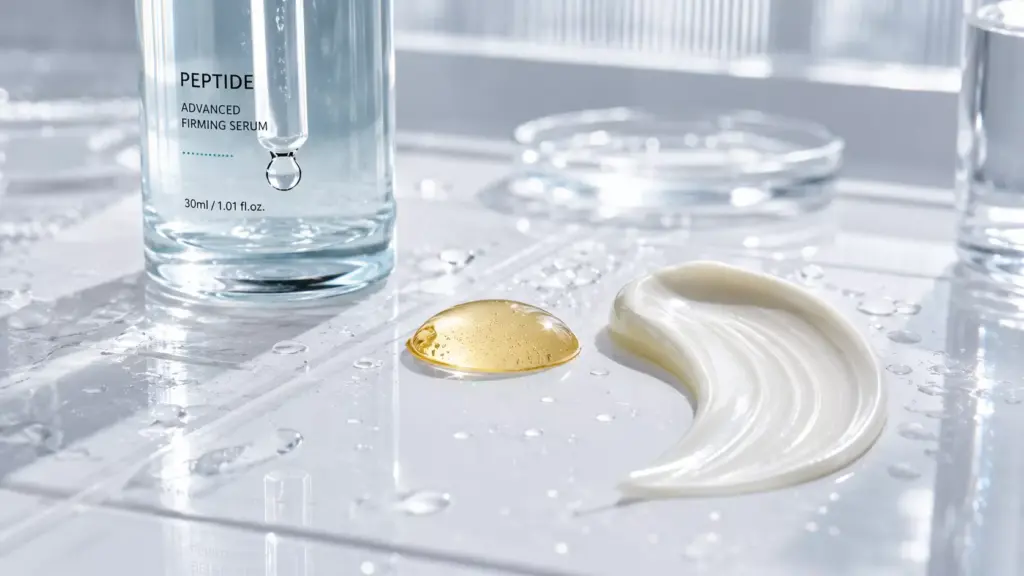
To implement this advanced anti-aging protocol into your evening routine without causing redness or flaking, follow this structured application method:
Step 1: Preparing the Dermal Base with Peptides
After cleansing with a low-pH gentle gel cleanser, apply a multi-peptide serum or water-based essence to clean, dry skin. Applying peptides first saturates your cells with hydrating, signal-rich messengers that prime the skin barrier before stronger actives are introduced.
Step 2: Micro-Dosing Retinol
Wait 2-3 minutes for your peptide serum to absorb fully. Apply a pea-sized amount of low-dose encapsulated retinol (0.1% to 0.3%) evenly across your face, avoiding the immediate eye contour. Encapsulated formulations release slowly overnight, preventing sudden irritation spikes.
Step 3: Sealing with Biomimetic Lipids
Lock in your active treatment layer with a rich, barrier-reinforcing moisturizer. Maintaining a healthy lipid matrix is essential when introducing potent cell-communicating actives into your routine. If your skin barrier is recovering from recent over-exfoliation or seasonal shifts, read our detailed guide on using a dual Cica and Ceramides recovery protocol, which explains how restoring your lipid matrix creates the ideal foundation for introducing active retinoids.
3. Comparative Analysis: Retinol Alone vs. Dual Peptide Protocol
To help you decide how to adjust your routine, review this straightforward comparison of using retinol in isolation versus integrating a dual peptide-retinol protocol:
- Single-Active Retinol Therapy (Retinol Alone)
- Primary Mechanism: Accelerates cell turnover and gene expression for collagen synthesis.
- Irritation Risk: High (frequent flaking, redness, TEWL elevation, and retinoid dermatitis).
- Barrier Support: Low (can temporarily weaken stratum corneum integrity).
- Best For: Resilient, non-sensitive skin types accustomed to strong actives.
- Single-Active Peptide Therapy (Peptides Alone)
- Primary Mechanism: Sends targeted signal messages to synthesize collagen and repair matrix proteins.
- Irritation Risk: Extremely Low (gentle, non-exfoliating biological signals).
- Barrier Support: High (promotes hydration and reinforces extracellular integrity).
- Best For: Highly reactive skin needing subtle hydration and repair.
- Dual Anti-Aging Protocol (Peptides and Retinol Combined)
- Primary Mechanism: Dual-pathway collagen stimulation paired with structural peptide signal repair.
- Irritation Risk: Low to Minimal (peptides soothe inflammation and buffer retinoid activity).
- Barrier Support: Maximum (promotes extracellular matrix density and hydration retention).
- Best For: Early anti-aging care, sensitive skin types, and anyone wanting smooth skin without peeling.
4. Advanced Behavioral Adjustments and Medical Disclaimers
The “Sandwich Technique” for Sensitive Skin
If you are new to retinoids or have reactive skin, implement the sandwich method: apply a layer of peptide serum or light cream, let it dry, apply your pea-sized retinol, and top it off with a rich peptide-ceramide moisturizer. This slows down active absorption rates while ensuring your skin receives complete collagen-building signals throughout the night. Always wear a broad-spectrum mineral SPF 30 or higher during the day, as retinoids increase photosensitivity.
Conclusion: Smart Aging Through Biological Synergy
Achieving firm, radiant skin does not mean enduring skin irritation or peeling. By understanding how Peptides and Retinol work in harmony, you can elevate your anti-aging routine into a high-performance, barrier-safe protocol. Combining the signaling precision of peptides with the proven efficacy of retinol delivers firm, youthful, and resilient skin without compromising your skin health.
Medical Disclaimer
The information provided in this article is for educational and informational purposes only and should not be construed as professional medical advice, diagnosis, or treatment. Always seek the advice of your dermatologist or other qualified health provider with any questions you may have regarding a specific skin condition or cosmetic protocol.