
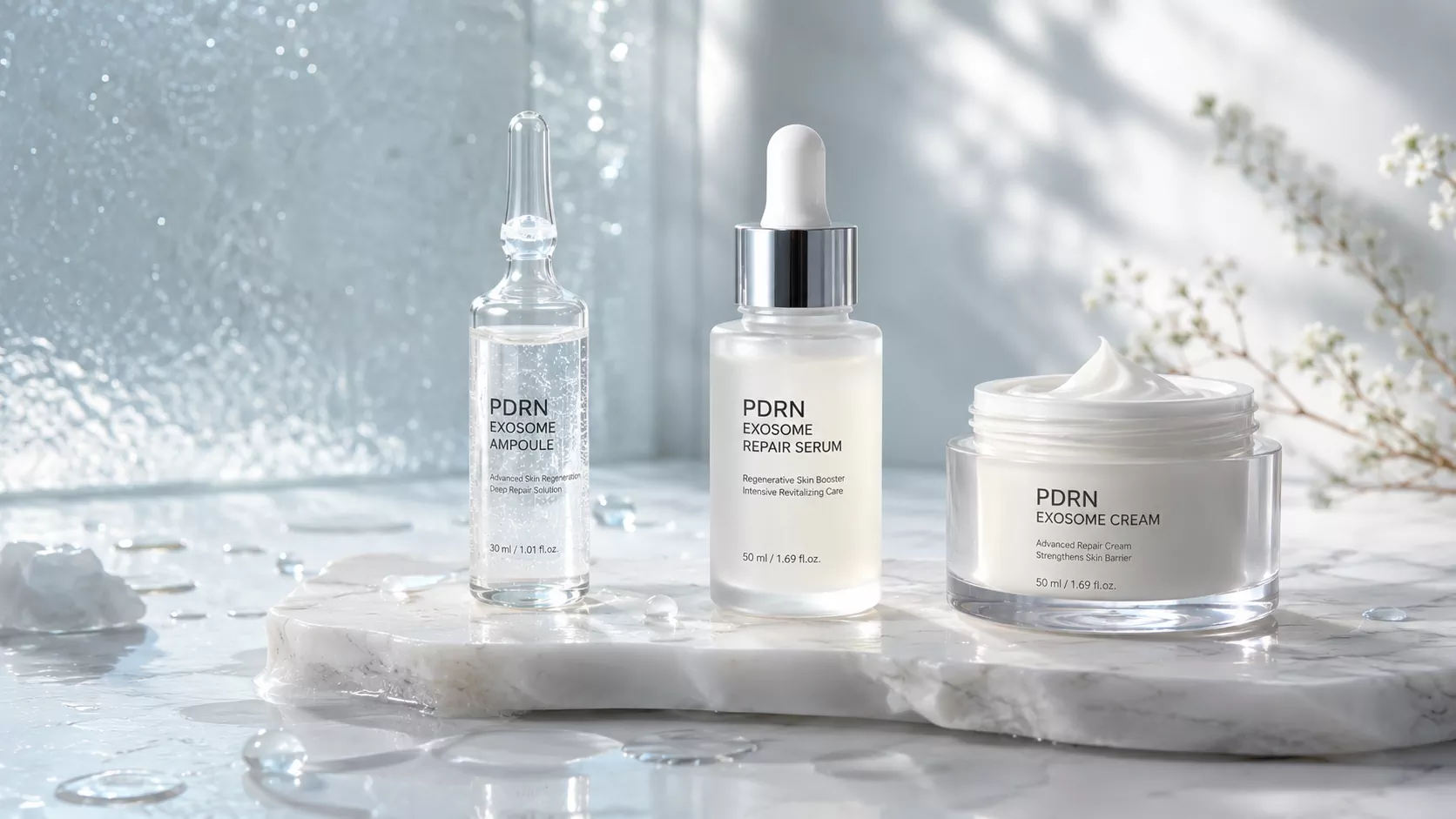
The global pursuit of the ultimate glass skin has officially transcended surface-level hydration. In July 2026, the epicenters of Seoul’s beauty culture—from the trendsetting clinics of Gangnam to the bustling aisles of Olive Young—are dominated by a massive shift toward biomimetic cellular regeneration. The gold standard of modern K-beauty trends is no longer just about masking imperfections, but about programming the skin to repair itself at a molecular level.
This movement is powered by two heavyweights of regenerative medicine migrating from professional dermatology clinics straight into daily vanity routines: PDRN (Polydeoxyribonucleotide) and Exosomes. For skincare enthusiasts in their 20s and 30s practicing “early wellness,” this synergy offers a non-invasive solution to cellular aging, UV-induced barrier depletion, and micro-textural scarring. However, achieving true clinical efficacy at home requires an understanding of how these advanced delivery systems navigate the skin’s lipid structure.
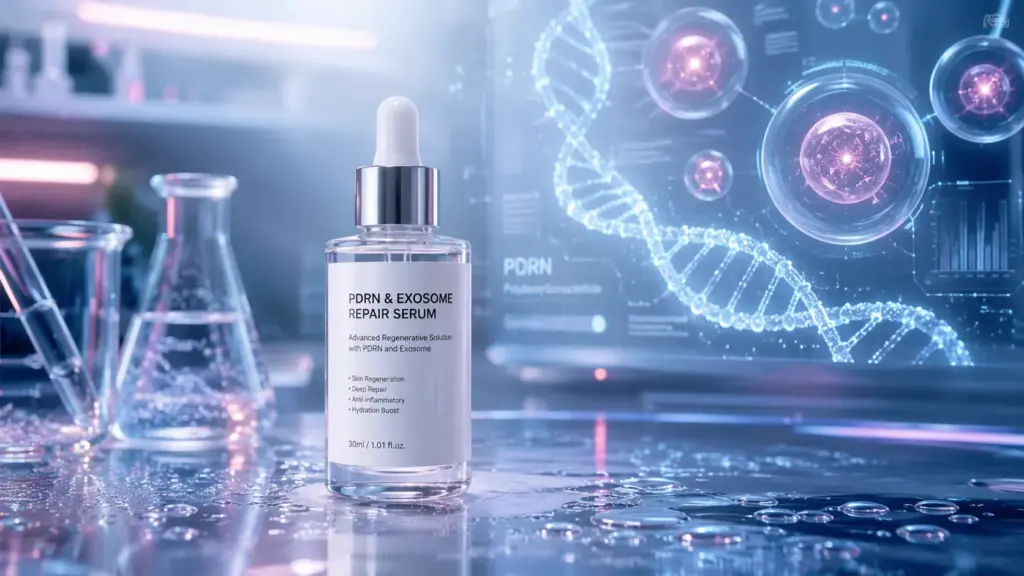
1. The Problem: The Biological Ceiling of Traditional Surface Anti-Aging Formulations
Many standard anti-aging topicals fail to deliver noticeable structural changes because they cannot bypass the stratum corneum’s defensive perimeter. When relying on traditional formulations, consumers frequently hit a biological ceiling characterized by several limiting factors:
- The Macromolecular Barrier Block: High-performance regenerative ingredients like standard collagen, hyaluronic acid, and basic growth factors possess a molecular weight far exceeding 500 Daltons. Consequently, they sit passively on top of the dead skin cell layer, providing temporary surface plumping but failing to signal deeper dermal remodeling.
- Rapid Extracellular Degradation: When raw active materials are applied to skin compromised by environmental stressors or UV damage, the localized overexpression of matrix metalloproteinases (MMPs) rapidly degrades these ingredients before they can bind to cell receptors.
- Receptor Fatigue and Inflammatory Risk: Overloading the epidermis with harsh synthetic acids or volatile anti-aging molecules in an attempt to force penetration often triggers chronic low-grade inflammation (inflammaging), which accelerates collagen degradation rather than preventing it.
2. The Explanation: The Cellular Synergy Behind the PDRN and Exosome Delivery Networks
To break through this biological ceiling, advanced K-beauty biotech utilizes a sophisticated dual-action delivery network that mirrors the body’s natural cellular communication.
In my own clinical and formulation observations of individuals utilizing bio-advanced K-beauty regimens in humid climates, the real magic happens when these two matrices are layered sequentially. PDRN, a low-molecular-weight DNA fragment extracted typically from salmon germ cells, acts as an emergency energy substrate. It binds directly to the adenosine A2A receptors on fibroblasts, instantly triggering DNA synthesis, mitigating UV-induced micro-inflammation, and reviving exhausted cells.
Simultaneously, Exosomes function as the ultimate high-tech delivery vehicles. These microscopic, bi-layered lipid spheres are natively recognized by skin cells. Because their shell structure perfectly mimics human cell membranes, they seamlessly merge with the epidermal lipid matrix, carrying vital proteins, microRNAs, and peptides deep into the targeted layers via endocytosis. The sequential integration of the PDRN and Exosome complex essentially provides both the structural blueprint and the molecular heavy machinery required to jumpstart cellular turnover.
The Skin Turnover Vitality Test
A simple way to gauge if your skin requires deep molecular intervention at home is to monitor how long a post-breakout dark spot or mild sunburst redness takes to completely fade. In a healthy, optimally functioning cellular matrix, micro-pigmentation should visibly resolve within 14 to 21 days. A longer recovery timeline indicates that your fibroblast activity and cellular turnover rate have slowed down, making your skin an ideal candidate for biomimetic signaling.
3. The Solution: The Biologically Optimized Clinical Homecare Protocol
To successfully incorporate these highly active biological matrices into your regimen without destabilizing your existing skin barrier, implement this structured sequencing protocol.
Routine Phase | Target Layer | Recommended Formulation Type | Strategic Cosmetic ActionStep 1: Bio-Signaling Focus | Stratum Corneum | Low-molecular-weight PDRN Ampoule | Awakens dormant fibroblasts; initiates rapid epidermal DNA repairStep 2: Cargo Delivery Focus | Upper Epidermis | Plant-derived or Milk Exosome Complex | Fuses with the cellular membrane to drop off regenerative cargoStep 3: Barrier Envelope | Surface Boundary | Multi-Ceramide + Ectoin Lipid Cream | Seals volatile biological signals; reinforces structural moisture retention
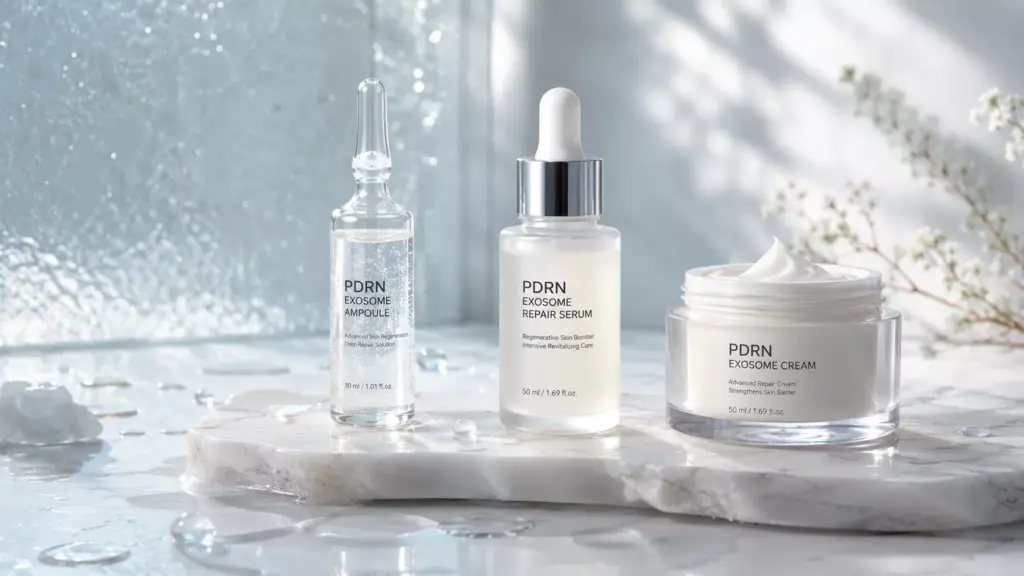
Step 1: Initiating Fibroblast Recruitment via PDRN Stacking
On thoroughly cleansed, slightly damp skin, apply 3 to 4 drops of a pure PDRN serum. Press the fluid firmly into the skin using the palms of your hands rather than rubbing. The mechanical pressing motion aids the low-molecular-weight DNA fragments in slipping past the loose surface corneocytes, allowing them to instantly access the active receptor sites in the lower epidermis.
Step 2: Maximizing Cargo Absorption with Exosome Integration
Once the PDRN base has fully absorbed (roughly 90 seconds), layer your exosome-infused complex immediately on top. Because exosomes are inherently hydrophobic on their exterior, they act as an escort system, pulling any remaining surface active ingredients down with them as they slip through the intercellular lipid channels.
Step 3: Protecting the Molecular Signal with an Ectoin Envelope
Never leave a biological signaling routine unsealed. To lock in the cellular communication network, apply a generous layer of a barrier cream enriched with Ectoin and a Multi-Ceramide system. Ectoin forms a highly stable, protective hydro-complex around proteins and cell membranes, shield-locking the freshly delivered intracellular cargo from external thermal stress and moisture evaporation.
Decoding the Ingredient List for Genuine Biotech Potency
When sourcing authentic Korean clinical homecare products, look closely for these specific INCI notations to ensure you are getting stable, high-affinity molecular concentrations:
- Sodium DNA (PDRN): Ensure it is listed near the top of the active matrix, preferably derived from controlled wild salmon or verified sustainable bio-fermentation, ensuring 95% or higher structural purity.
- Hydrolyzed Extracellular Vesicles (Exosomes): Look for advanced plant-derived variations such as centella, panax ginseng, or cica-exosomes, which exhibit exceptional anti-inflammatory and barrier-stabilizing properties.
Managing the Bio-Active Transition Phase and Patch Testing
Because PDRN and exosomes are highly active cell-signaling molecules, introducing them to an unprimed skin barrier can occasionally cause temporary micro-congestion or transient redness as cellular turnover rapidly accelerates. To seamlessly transition into this clinical homecare routine without triggering an adverse response, always adhere to a strict patch testing protocol:
- The 72-Hour Micro-Zone Test: Apply a single drop of the PDRN ampoule behind your ear or along the jawline for three consecutive nights. If no micro-papules or inflammatory itching occurs, introduce the serum to your entire face just twice a week, slowly building up to nightly application over a 14-day period.
- Buffer Layering for Hyper-Reactive Skin: If you possess an inherently compromised stratum corneum, apply a microscopic layer of your multi-ceramide cream before tapping in the exosome complex. This temporary buffer slows down the rapid endocytosis rate, allowing sensitive cell receptors to adjust to the heavy cargo delivery without becoming overwhelmed.
4. Critical Mistakes to Avoid
- Simultaneous Layering with High-Percentage Acids: Avoid pairing your PDRN and exosome treatments in the exact same routine with high-strength AHAs (like glycolic acid) or low-pH pure Vitamin C (L-Ascorbic Acid). The extreme acidity can denature the delicate structural proteins and peptide cargo packed inside the exosome spheres, rendering the formula useless.
- Skipping the Deep Double Cleanse: Because biological delivery vehicles are engineered to tightly bind to and penetrate the upper epidermal layers, any residual oil-soluble pollutants or heavy silicone sunscreens left on the skin will block their pathway. Always maintain an immaculate skin baseline via a strict double cleansing method prior to applying biotech treatments.
Frequently Asked Questions (FAQ)
Q1: Can I use PDRN and exosome products if my skin is highly sensitive or prone to rosacea?
A. Yes, they are highly beneficial. Unlike traditional aggressive anti-aging molecules like retinoids which can cause purging and redness, PDRN and exosomes are bio-compatible anti-inflammatory signaling agents. They work to calm cellular distress and accelerate barrier repair, making them exceptional options for soothing hyper-reactive or structurally thinned skin types.
Q2: How long does it take to see visible results from a biotech homecare routine?
A. While surface hydration improves within hours due to the humectant bases, structural regeneration operates on a cellular timeline. You can expect a noticeable improvement in skin bounce, reduction in micro-textural redness, and a more uniform light-reflective glow after 4 to 6 weeks of consistent daily application, aligning with your skin’s natural renewal cycle.
Clinical Proof & Medical Disclaimer
According to recent clinical investigations evaluating the therapeutic efficacy of low-molecular-weight biological fragments and extracellular vesicles, the topical application of these biomimetic agents significantly accelerates dermal tissue repair, upregulates endogenous gene expression for type I collagen, and reduces pro-inflammatory signaling pathways. This clinical data highlights why moving toward advanced cellular communication platforms represents the frontline of modern dermatological age-preventative maintenance.
Medical Disclaimer: The information provided in this article is for educational purposes only. It is not intended to be a substitute for professional medical advice, diagnosis, or treatment. Always seek the advice of your dermatologist or a licensed aesthetician.