
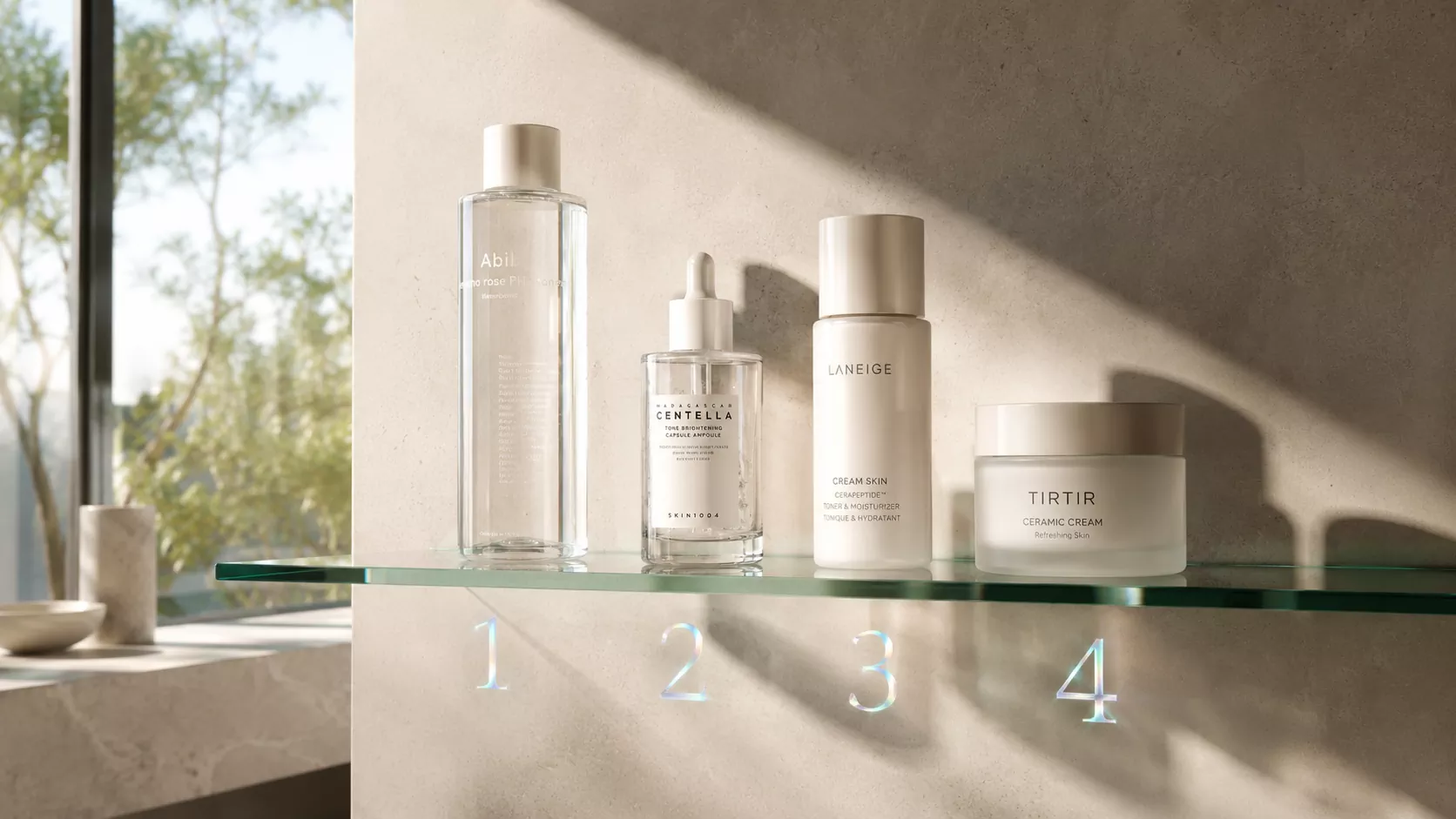
Have you ever stared at your bathroom vanity, holding three different serums and a heavy barrier cream, completely clueless about which one goes on first? You are definitely not alone. In our collective obsession to achieve that seamless, airbrushed, and dew-drenched finish, most of us fall into the trap of buying every viral active ingredient we see on our social feeds. But instead of that coveted translucent clarity, we often end up with a frustrating mess of product pilling, random dry patches, and localized breakouts.
The truth is, slapping on your favorite formulations in a random sequence can completely neutralize their active ingredients or create an impenetrable block that stops deep absorption. If your expensive serums are just sitting on top of your face and balling up into tiny white flakes under your makeup, your current layering sequence is working against you. To ensure every single drop actually sinks into your skin matrix and delivers real results, mastering the precise clinical skincare routine order is an absolute necessity.
Here at keditbeauty, we treat skincare as a balance between clinical precision and authentic self-care. During my time living in Seoul and collaborating with top-tier aesthetic clinics in Gangnam, I watched firsthand how Korean women approach product sequencing. They don’t just randomly slather on products; they follow a strict hierarchy based on molecular density and fluid dynamics to lock in maximum hydration.
In this definitive guide, we will break down the biological reasons behind product pilling, map out the flawless night-and-day rotational framework, and deliver the exact solutions to master a personalized skincare routine order that completely transforms your complexion.
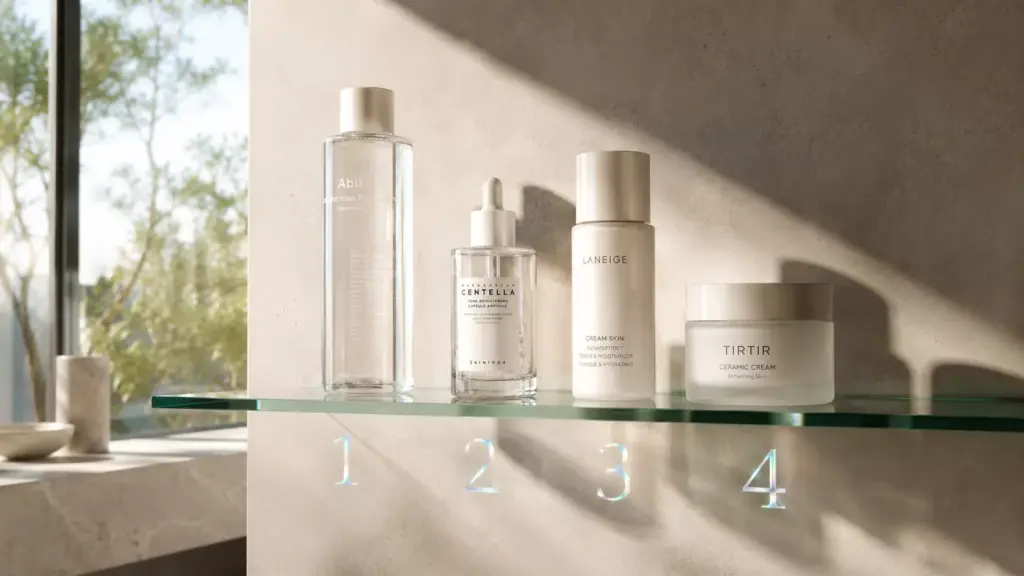
1. The Golden Rule of Fluid Dynamics: Why Molecular Weight Dictates Your Routine
To understand the core philosophy behind a strategic skincare routine order, you must understand that your cells cannot absorb heavy lipid molecules before lighter, water-based formulations. The universal rule of layering is remarkably simple: always move from the thinnest consistency to the thickest consistency. Water-based liquids with tiny molecular weights—like watery toners, liquid essences, and fluid ampoules—need to touch your bare cells first so they can penetrate deep into the lower layers of the stratum corneum.
When I first started experimenting with a multi-step regimen, I made the amateur mistake of applying a dense, botanical face oil right after my cleanser because my skin felt dry. Then, I patted my lightweight hyaluronic acid serum on top. Within two days, my face was a congested mess of tiny whiteheads, and my skin felt drier than ever. That is because the heavy oil created an impenetrable hydrophobic shield. My serum couldn’t break through that oily barrier and simply evaporated into thin air.
Ignoring the correct texture sequence frequently triggers severe micro-inflammation or ruins your moisture shield—an issue we deeply deconstructed in our professional recovery guide on how to repair skin barrier damage. When you learn how to layer based on molecular density, you allow each unique formulation to dry down beautifully, ensuring your foundational matrix remains plump, radiant, and perfectly balanced.
2. The Solution: The Flawless AM and PM Layering Blueprint
The secret to maximizing your skincare investment relies on establishing a disciplined schedule that separates your daytime protection needs from your nighttime recovery cycles. According to official dermatological studies published by the National Institutes of Health, the stratum corneum requires distinct topical support during daylight hours compared to its nocturnal cell-regeneration phase. To read more about how topical formulations and occlusive film mechanics impact your epidermal barrier over time, you can verify the official medical metrics on Skin Moisturizers and Occlusive Film Mechanics by the National Institutes of Health which outlines barrier protection parameters.
By aligning your products with this biological clock, you can easily optimize your daily routine. Here is exactly how to structure your day-and-night sequence:
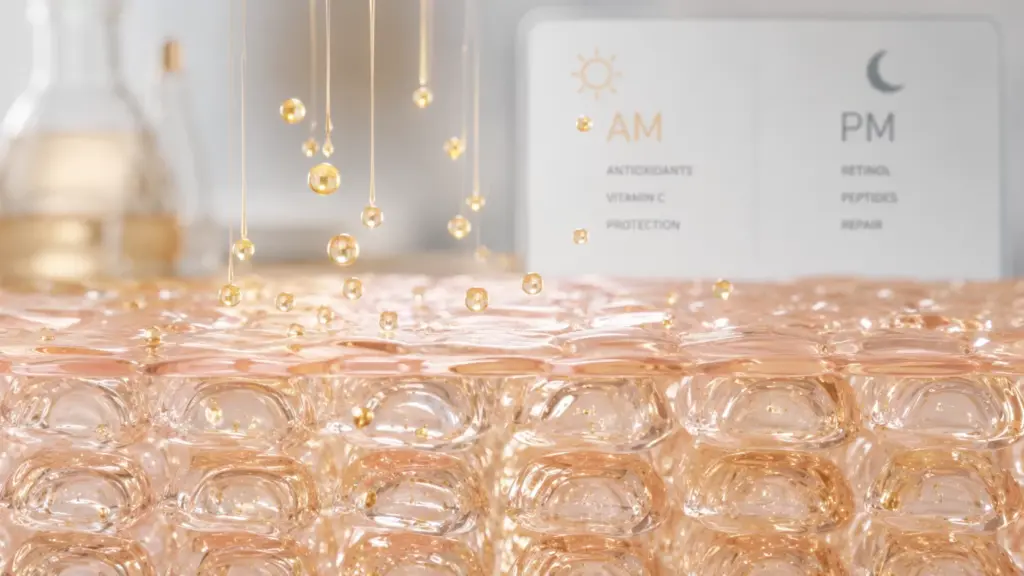
- The Morning (AM) Sequence: Focuses entirely on environmental defense and weightless hydration. Cleanse gently, apply your Vitamin C antioxidant serum to shield against UV-induced free radicals, layer a weightless emulsion, and always finish with a broad-spectrum sunscreen (SPF 30+).
- The Nighttime (PM) Sequence: Focuses on deep cellular repair. This is where you implement advanced structural scheduling, such as a dermatologist-approved skin cycling routine to rotatively deploy your chemical exfoliants and powerful anti-aging retinoids onto a perfectly prepped canvas without triggering severe peeling.
3. The Definitive Layering Matrix: Step-by-Step Product Sequences
To help you seamlessly organize your vanity, we have summarized the exact application sequence, product types, and primary functions for an optimized daily regimen.
| Sequence Step | Product Formulation Type | Target Timeline | Primary Biological Goal |
| Step 1: Cleanse | Water-based / Double Cleanse | AM & PM | Remove surface debris, sweat, and oil |
| Step 2: Tone | Hydrating Liquid Toner / Essence | AM & PM | Balance pH & prep tissue for absorption |
| Step 3: Treat | Targeted Serums (Vitamin C / Retinol) | AM or PM (Split) | Deliver concentrated actives to target concerns |
| Step 4: Moisturize | Emulsion / Lipid Barrier Cream | AM & PM | Lock in active hydration & seal the matrix |
| Step 5: Protect | Broad-Spectrum Sunscreen (SPF 30+) | AM Only | Shield cells from UV-induced oxidative stress |
Decoding the Application Matrix
This tactical framework represents the precise sequence used by clinical specialists to prevent ingredient conflicts while maximizing cumulative skincare benefits.
- The Early Steps (Steps 1 & 2) focus on purifying and dampening the tissue. Applying a lightweight hydrating toner on damp skin acts like a sponge, significantly increasing the penetration rate of your subsequent treatments.
- The Treatment Step (Step 3) is where your active molecules work at a cellular level. Keep your high-pH and low-pH ingredients separated between day and night to avoid neutralizing their potency.
- The Final Steps (Steps 4 & 5) utilize dense, emulsified structures to form a protective blanket over your skin. If your face is going through an exceptionally dry or texturized phase, Step 4 is your perfect opportunity to implement a plush korean glass skin routine technique, such as K-slugging with an herbal sleeping mask, to physically lock in moisture density and achieve a gorgeous, glazed-donut finish before your head hits the pillow.
Conclusion: Discipline Outperforms Chaos
Social media beauty trends come and go, but the foundational principle of a proper skincare routine order remains absolute: respect your skin’s natural biology and layer from thinnest to thickest consistency. True skincare mastery is never about using a chaotic 10-step system or hoarding every viral product out of panic. By taking a step back, respecting the molecular weight of your products, and remaining patient through the drying phases, you maximize absorption and protect your foundational moisture shield. Stop guessing your layering sequence, remain disciplined with your morning and evening steps, and allow your skin to reveal its naturally smooth, resilient, and balanced perfection.
FAQ (Frequently Asked Questions)
Q1. How long should I wait between applying each skincare layer?
A. For most lightweight layers like toners, essences, and basic hydrating serums, you only need to wait about 30 to 60 seconds—just enough time for the product to feel absorbed and slightly tacky before moving to the next step. However, when applying potent pH-dependent actives like Vitamin C, liquid chemical exfoliants, or pure Retinol, it is highly beneficial to wait 2 to 3 minutes to let the formula fully stabilize on your tissue before sealing it with a heavy moisturizer.
Q2. Can I mix my facial oil directly into my moisturizer to save time?
A. Yes, absolutely! If you are running low on time or want to lighten up a heavy oil, mixing 1 to 2 drops of a non-comedogenic facial oil directly into your evening moisturizer is a fantastic shortcut. This creates a beautifully emulsified, rich barrier blanket that deeply crushes dry patches without altering the overall structural sequence.
Q3. Can I use Niacinamide and Vitamin C in the same skincare routine order?
A. Yes, absolutely! There is a lingering myth from old textbook studies that mixing Niacinamide and Vitamin C neutralizes both ingredients or causes skin flushing. However, modern cosmetic formulations are highly stabilized. If you have sensitive tissue and want to be conservative, simply separate them within your daily schedule: apply your Vitamin C serum during your morning routine to maximize antioxidant protection, and save your Niacinamide formula for your evening routine to boost barrier repair while you sleep.
Disclaimer
The information provided on keditbeauty is for educational and informational purposes only and should not be construed as professional medical advice, diagnosis, or treatment. Always seek the advice of a qualified dermatologist or skincare professional with any questions you may have regarding a medical condition or specific skin concerns. Individual results may vary depending on skin type, sensitivity, and proper application. Reliance on any information provided in this article is solely at your own risk.